

Profit Margins Compared: Dropshipping vs. Full-Scale Private Label Cosmetics in 2026
The global beauty industry is evolving at an unprecedented pace, and aspiring entrepreneurs face a critical, foundational decision when launching a brand. Understanding the deep financial and operational nuances of dropshipping vs private label cosmetics is absolutely essential for determining your business's long-term success, viability, and profitability. In 2026, the technological barrier to entry for e-commerce remains incredibly low, but the pathway to building a sustainable, highly valued beauty brand has shifted dramatically. Consumers are more educated than ever, demanding clinical-grade formulations, highly sustainable packaging, and absolute brand transparency.
This comprehensive guide breaks down the core differences, exposes the hidden costs, and highlights the strategic advantages of each fulfillment model. Whether you are cautiously testing the waters with a zero-inventory storefront or preparing to launch a full-scale OEM beauty empire, knowing exactly how to navigate these supply chain options will dictate your net profits. We will explore real-world profit margins, current market trends, and highly actionable strategies to help you scale your cosmetics business effectively.
What is the Profit Margin Difference Between Dropshipping vs Private Label Cosmetics?
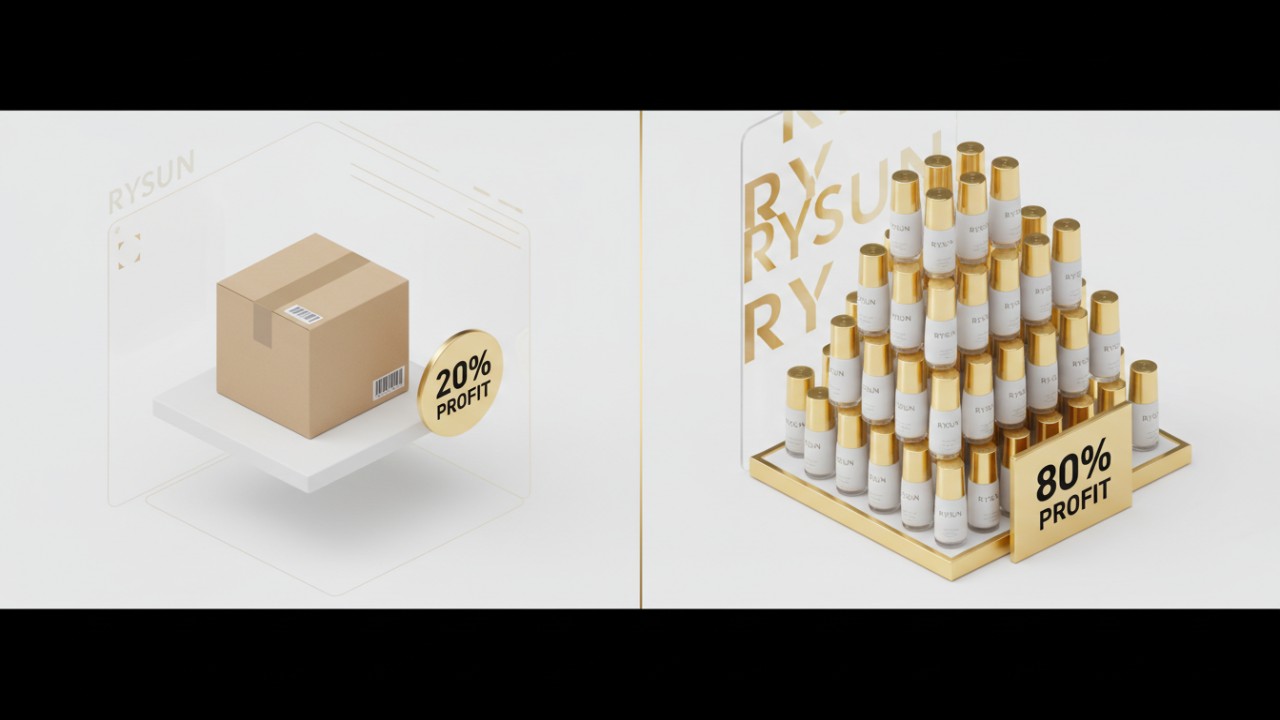
The profit margin difference between dropshipping and private label cosmetics is substantial; dropshipping yields 15% to 20% due to single-unit fulfillment costs, whereas private labeling offers 50% to 80% margins by purchasing bulk inventory directly from manufacturers.
Understanding starting a cosmetic line profit margins is the most crucial step in business planning. Here is how the two e-commerce models financially compare when executed at scale:
- Dropshipping Margins (15% - 20%): Because you are paying retail-adjacent prices for single-unit fulfillment, your cost of goods sold (COGS) remains artificially high. The supplier absorbs the inventory risk but charges a premium for the convenience of picking, packing, and shipping on demand.
- Private Label Margins (50% - 80%): Purchasing bulk inventory direct from a manufacturer drastically reduces your per-unit costs. This wholesale pricing model unlocks true scalability, allowing you to reinvest aggressively into marketing and customer acquisition.
- Pricing Control: Choosing private label allows you to dictate the pricing strategy, build tangible brand equity, and avoid the intense price wars that are notoriously common in the dropshipping space where multiple sellers offer the exact same product.
Comparison Table: Dropshipping vs. Full-Scale Private Label Cosmetics
| Feature / Metric | Dropshipping Model | Full-Scale Private Label |
|---|---|---|
| Average Profit Margin | 15% - 20% | 50% - 80% |
| Upfront Inventory Cost | $0 (No inventory) | $1,000 - $5,000+ (Depends on MOQ) |
| Product Control | None (Generic formulas) | High (Custom formulations & packaging) |
| Brand Equity | Low (Commodity products) | High (Unique brand asset) |
| Shipping Times | Often 7-14+ days (Third-party) | 2-5 days (In-house or 3PL fulfillment) |
| Quality Assurance | Blind trust in supplier | Strict clinical testing and verification |
Key Takeaways: Quick Summary of the 2026 Market
In the 2026 beauty market, dropshipping remains a low-risk testing ground, but private labeling is essential for scalable profitability, as modern consumers demand high-quality, transparent ingredients that only direct manufacturer relationships can securely guarantee.
To succeed in OEM cosmetics manufacturing 2026, entrepreneurs must adapt to the following market realities and consumer expectations:
- Transition to Scale: Dropshipping is an excellent, low-risk testing ground to find winning product concepts, but transitioning to private labeling is essential for long-term scalability and profitability.
- Consumer Expectations: The 2026 beauty consumer demands high-quality, transparent, and clinically backed ingredients that generic dropshipping cannot guarantee.
- Eliminating Middlemen: Working directly with an established cosmetic research institute and manufacturer eliminates the middleman, securing higher margins and better quality control.
- Asset Valuation: Brand ownership and intellectual property (IP) are the ultimate drivers of business valuation in e-commerce. A brand with its own customized formulas and packaging is an asset that can be sold; a dropshipping storefront is often just a temporary cash flow vehicle.
Dropshipping Cosmetics: The Low-Barrier Entry
Dropshipping cosmetics is an e-commerce model requiring zero upfront inventory, allowing entrepreneurs to test trending products quickly, but it significantly limits control over product quality, formulation consistency, packaging, and overall customer delivery times.
For many beginners, white label dropshipping beauty provides a fast track to launching a storefront without needing a massive business loan. However, it is vital to weigh the long-term operational pros and cons:
- Zero Inventory Requirement: The primary advantage is the total elimination of upfront capital risk. You do not need to buy thousands of units before making a single sale, keeping your overhead low.
- Speed to Market: Setup is nearly immediate, allowing fast testing of trending products and marketing angles across social media platforms like TikTok and Instagram.
- Lack of Quality Control: Significant downsides include an inability to control product quality, formulation consistency, or unboxing experiences. You are completely at the mercy of the supplier's daily operations.
- Customer Retention Issues: Heavy reliance on third-party suppliers often leads to shipping delays, damaged packaging, and poor customer retention, which is fatal to subscription-based beauty models that rely on loyal, returning buyers.
Full-Scale Private Label Cosmetics: The High-Margin Brand Builder
Full-scale private label cosmetics involves purchasing customized, branded inventory at wholesale costs, giving you complete control over brand identity, pricing strategy, and exclusive formulations to build a highly profitable, tangible business asset.
Partnering with elite private label skincare manufacturers transforms your business from a middleman operation into a recognized, authoritative brand. As reported by Wikipedia, a private label product is often created exclusively for a client, allowing the brand to set specific demands on what the product contains and how it is ultimately presented to the market.
- Wholesale Unit Economics: Purchasing at true wholesale costs unlocks exponential profit margins compared to single-unit dropshipping. This massive margin difference allows you to reinvest heavily in top-tier marketing.
- Brand Trust: Full control over brand identity, packaging, and custom labels builds immense customer trust and loyalty. You design the unboxing experience from start to finish.
- R&D Access: Access to advanced R&D formulations ensures your products stand out against saturated generic markets, elevating your catalog from basic commodities to premium, scientifically-backed solutions.
- Exit Strategy: Creating a tangible asset with a loyal customer base, proprietary designs, and reliable supply chains means your business can eventually be sold or acquired by larger beauty conglomerates for a high multiple.
Gap Analysis: Hidden Costs and 2026 Beauty Trends Competitors Miss

Competitors often ignore the hidden customer acquisition costs of dropshipping and the 2026 consumer demand for clinical-grade formulations, proving that optimized unit economics in private labeling consistently yield higher net profits despite lower gross revenue.
The modern skincare landscape is heavily regulated and intensely scrutinized by buyers. As detailed by Wikipedia, modern cosmetics face stringent global regulations regarding safety testing, ingredient transparency, and marketing claims.
- Customer Acquisition Cost (CAC) vs. Margin: Competitors rarely discuss the hidden costs of dropshipping, such as high ad costs eating away at thin 15% margins. If it costs $20 to acquire a customer for a $30 product, a dropshipper paying $15 for the product actually operates at a loss.
- Clinical-Grade Demand: In 2026, consumers demand clinical-grade formulations, clean ingredients, and strict dermatological testing, which generic dropshippers simply cannot verify or legally claim.
- The Profit Illusion: Real pricing data reveals that scaling a $100k/month brand via dropshipping often leaves less net profit than a $40k/month private label brand due to optimized unit economics and significantly higher repeat purchase rates.
- Sustainability Requirements: Sustainable packaging and clean ingredients are no longer optional. Making direct manufacturer relationships mandatory ensures your packaging meets the eco-conscious demands of the current global market.
Scaling Up: How Guangzhou Rysun Biotechnology Co., Ltd. Transforms Margins
Scaling from dropshipping to private label requires a trusted partner like Guangzhou Rysun Biotechnology Co., Ltd., which offers a research-driven OEM/ODM solution that maximizes profit margins while ensuring premium, clinical-grade formulations for your beauty brand.
For brands looking to shift from low-margin models to high-margin ownership, finding reliable custom formulation cosmetics suppliers is the definitive step in claiming your market share. Guangzhou Rysun Biotechnology Co., Ltd. provides a seamless, professional transition for scaling brands:
- A Foundation of Excellence: Established in 2014 by Ivy Wong in the Guangzhou High-Tech Development Zone, Rysun was born from a collaboration with a Swiss anti-aging expert to combat inconsistent market quality.
- Research-Driven Innovation: Rysun’s Research Institute features a multidisciplinary team of 20 leading scientists across biology, dermatology, microbiology, and chemistry. This specialized team has successfully secured 105 proprietary product patterns and 253 intellectual properties.
- Global Experience: With over 10 years of experience partnering with more than 700 brands across 50 countries, Rysun guarantees premium formulations across makeup removers, face serums, face creams, eye care, and body lotions.
- Uncompromising Quality Control: Rysun actively protects your brand equity by implementing up to 50 rigorous inspection procedures per product, ensuring the clinical-grade quality that 2026 consumers absolutely expect.
- Strategic Growth: Understanding the financial transition is vital. We highly recommend reviewing our comprehensive private label cosmetics moq guide to properly calculate your bulk manufacturing savings and streamline your inventory flow.
Expert Tips & Common Mistakes When Launching Your Cosmetic Line
The most common mistake when launching a cosmetic line is relying on unverified generic suppliers, while the best expert tip is to prioritize research-driven manufacturers that offer strict quality control and customized formulations to differentiate your brand.
Before heavily investing your capital, carefully review these essential operational strategies:
- Mistake: Relying on unverified generic suppliers, leading to inconsistent batches, compromised ingredients, and ultimately a ruined brand reputation.
- Expert Tip: Prioritize manufacturers that emphasize affordable, practical solutions with strict quality control over those simply offering the cheapest unit price. A slightly higher upfront cost for a superior formulation pays off exponentially in customer lifetime value.
- Mistake: Ignoring minimum order quantity (MOQ) math. Failing to calculate your break-even point based on bulk manufacturing savings versus single-unit dropship costs can drain your cash flow early on.
- Expert Tip: Leverage the expertise of a dedicated R&D facility to customize active ingredients. Adding unique botanical extracts or clinical actives elevates your product from a basic commodity to a premium, sought-after skincare solution.
Conclusion
While dropshipping offers an easy entry point, full-scale private labeling is the definitive winner for profit margins, brand control, and long-term business equity in 2026. By taking ownership of your supply chain and partnering with an innovative, research-driven manufacturer, you can achieve 50% to 80% margins and deliver exceptional quality to your customers. Evolving from a dropshipping storefront into a proprietary brand requires a strategic leap, but the financial rewards and brand loyalty make it an indispensable move for serious beauty entrepreneurs. Contact us today to optimize your dropshipping vs private label cosmetics strategy.
FAQs About dropshipping vs private label cosmetics
Is dropshipping or private label cosmetics better for beginners?
Dropshipping is often better for absolute beginners with minimal capital to test the market without holding inventory. However, private label is highly recommended for those serious about building a sustainable, high-margin brand from the start, as it provides far greater control over product quality and profitability.
What is the average profit margin for private label cosmetics?
Private label cosmetics boast highly lucrative profit margins, typically ranging between 50% and 80%. This is because you are buying directly from a manufacturer at bulk wholesale prices, bypassing the costly fulfillment fees associated with single-unit dropshipping.
How much does it cost to start a private label skincare brand?
Startup costs vary, but initial investments for a quality private label run usually range from $1,000 to $5,000. This covers sample testing, custom packaging, and hitting initial Minimum Order Quantities (MOQs) with your chosen manufacturing partner.
Can you dropship private label cosmetics?
Yes, some modern suppliers offer private label dropshipping (also known as white-label dropshipping), where they apply your logo to their generic products before shipping. However, margins are generally lower than traditional bulk-purchasing private label models, and you still lack true control over the fulfillment process.
Why do private label margins beat dropshipping?
Private labeling eliminates the intermediary markup found in standard dropshipping models. You also control the final retail price, meaning you can establish premium positioning without competing against thousands of other sellers pushing the exact same unbranded product.
What are the risks of dropshipping skincare products?
The primary risks include inconsistent ingredient quality, potential allergic reactions, and severe shipping delays. There is also a significant lack of transparency regarding manufacturing conditions and compliance testing, which can lead to legal and reputational damage.
How do I find a reliable cosmetic manufacturer like RYSUN?
Look for manufacturers with established R&D institutes, extensive intellectual property, and robust quality control protocols. Guangzhou Rysun Biotechnology Co., Ltd. meets these criteria perfectly, partnering with 700+ brands and enforcing 50 strict inspection procedures per product to ensure market-leading quality.
Is white label the same as private label?
They are similar but distinct: white label refers to a generic product sold to multiple retailers who simply apply their own branding. Private label typically implies greater exclusivity, allowing for deep customization of formulations, packaging, and unique product patterns tailored for a single brand.
Related articles
Get more information
If you have any comments or good suggestions, please leave us a message; later our professional staff will contact you as soon as possible.
Rysun Biotechnology--Unremittingly strive for human health and beauty
Contact RYSUN
Email: k.lee@rysunoem.com
WhatsApp: +86 156 0306 9138
Address: No. 62 Nanxiang First Road, Science Town of Guangzhou Developed Zone, Huangpu, Guangzhou, China.
© 2025 RYSUN. All Rights Reserved. Privacy Policy | Terms and Conditions | Sitemap
Facebook
Instagram