


Where Does Your Money Go? A Transparent Cosmetic Manufacturing Cost Breakdown for 2026
What Is a Cosmetic Manufacturing Cost Breakdown?
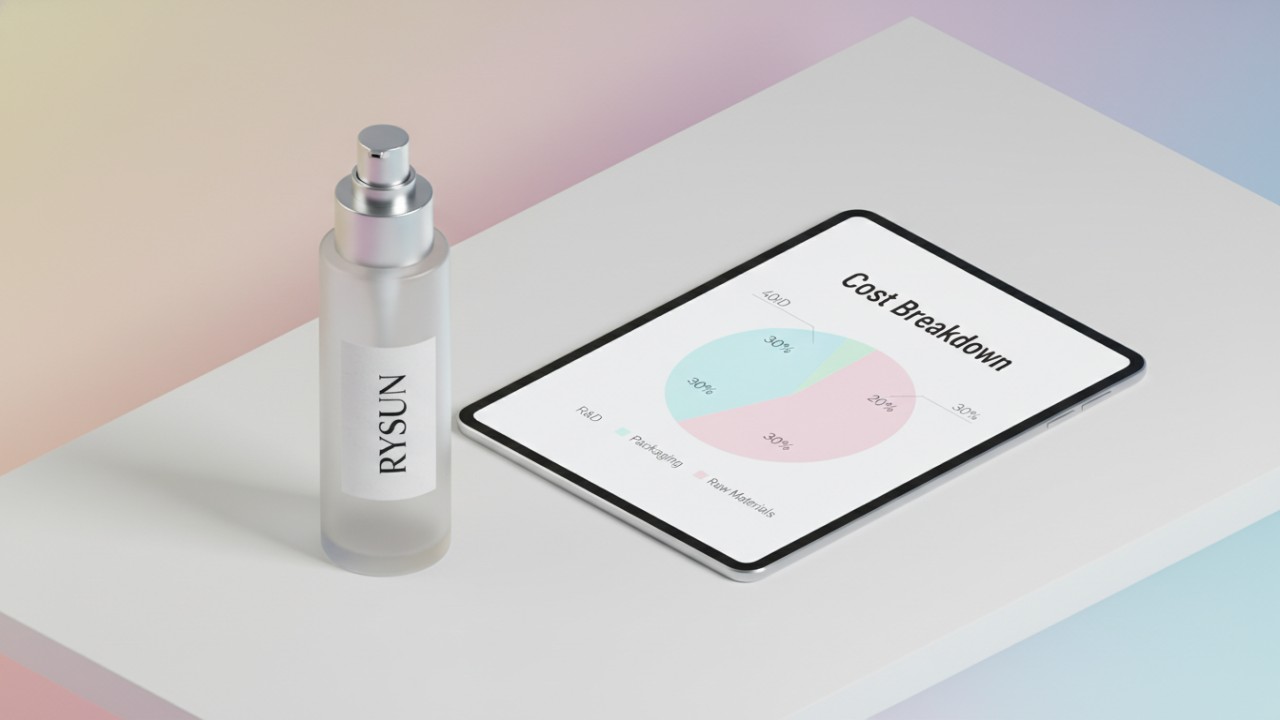
A cosmetic manufacturing cost breakdown is a comprehensive financial analysis detailing all expenses required to produce a beauty product. This includes formulation, raw materials, packaging, direct labor, facility overheads, and compliance testing to determine your final product pricing.
Understanding these metrics is essential for beauty brands to establish profitable retail pricing and maintain sustainable profit margins. By analyzing your cost of goods sold beauty industry benchmarks, you can pinpoint exactly where your capital is being allocated and where efficiencies can be gained. In 2026, the beauty market requires founders to be hyper-aware of their financial structures, as rising supply chain complexities demand precise budgeting. Without a clear picture of your expenses, your brand risks burning through capital before reaching the retail shelves.
Key components of this financial breakdown include:
- Research and Development (R&D): The specialized scientific labor and laboratory testing behind your formula.
- Raw Materials: The active, functional, and base ingredients required to make the product effective.
- Packaging: Both the primary containers and the secondary outer protective boxes.
- Labor and Overhead: The human workforce, machinery maintenance, and facility operating costs.
Quick Summary: Key Takeaways on Beauty Production Costs
The core takeaways for beauty production costs reveal that packaging consumes 30-40% of the budget, raw materials take 15-25%, and R&D requires 10-20%, with high order quantities significantly lowering the per-unit expense.
When examining your cosmetic product development costs, founders must look deeply at how each distinct phase impacts the final bottom line. While high Minimum Order Quantities (MOQs) require more initial capital investment, they drastically improve long-term gross margins by unlocking economies of scale. Brands that understand how to distribute these costs efficiently are the ones that survive and thrive in competitive retail environments.
Critical factors influencing your bottom line include:
- Formulation Complexity: Costs vary widely based on the product. A basic body wash is far less expensive to develop than an advanced, multi-active face serum.
- Sustainable Packaging: As consumer demand shifts, eco-friendly materials continue to command a significant premium in 2026.
- Manufacturing Efficiency: Larger, continuous production runs help to effectively spread out fixed operational costs across more units.
Phase 1: Formulation, R&D, and Intellectual Property
Formulation and R&D costs cover the upfront investment in laboratory time, clinical testing, stability trials, and creating proprietary intellectual property required to bring a safe beauty product to market.
Custom formulation requires significantly more capital than standard private label options because it involves starting from scratch. However, brands can dramatically reduce these initial expenses by partnering with a highly experienced manufacturer. For example, Guangzhou Rysun Biotechnology Co., Ltd. was established in 2014 by Ivy Wong after she recognized the inconsistent quality of skincare products during discussions with a Swiss anti-aging expert. To solve this, Rysun founded its dedicated Research Institute in 2015. By leveraging a multidisciplinary team of 20 leading scientific researchers and our existing portfolio of 253 intellectual properties and 105 product patterns, brands can completely bypass expensive, ground-up R&D.
Benefits of utilizing established R&D infrastructure:
- Speed to Market: Skip months of initial microbiological and stability testing by using proven bases.
- Cost Efficiency: Avoid paying exorbitant hourly laboratory fees for brand-new formulation development.
- Proven Results: Utilize advanced formulations that have already been tested and perfected across our partnerships with over 700 brands globally.
Phase 2: Raw Materials and Active Ingredients Sourcing
Raw material sourcing involves procuring base elements like water and glycerin, as well as advanced active ingredients like peptides and botanical extracts, which heavily dictate the internal cost of the cosmetic formula.
The price of bulk ingredients fluctuates wildly based on global supply chain dynamics, regional agricultural yields, and 2026 import tariffs. Procuring raw materials at scale yields massive economies of scale that smaller boutique labs simply cannot match. When you work with a high-volume, vertically integrated manufacturer like Rysun—which exports to over 50 countries—we are able to secure premium ingredients for high-demand products like makeup remover and eye care products at heavily negotiated, discounted rates.
Here is an estimated percentage breakdown of ingredient costs within a standard formula [1]:
| Ingredient Category | Average Percentage of Total COGS | Examples |
|---|---|---|
| Base/Carriers | 5% - 10% | Water, Aloe Vera, Glycerin |
| Functional Ingredients | 10% - 15% | Emulsifiers, Thickeners, Preservatives |
| Active Ingredients | 15% - 30% | Peptides, Vitamin C, Retinol, Hyaluronic Acid |
| Fragrance/Colorants | 5% - 10% | Essential Oils, Synthetic Fragrances, Mica |
Phase 3: Packaging, Tooling, and Component Fees
Packaging fees encompass the primary containers holding the product and the secondary outer boxes, alongside hidden expenses for custom tooling, mold creation, and sustainable material premiums.
This phase almost always represents the largest portion of your overall cosmetic manufacturing cost breakdown. The structural distinction between container types is critical, as detailed by Wikipedia [2]; primary packaging houses the cosmetic product directly and must ensure chemical compatibility, while secondary packaging is the outer wrapping used for branding and protection during transit. In 2026, transitioning to fully recyclable or biodegradable packaging adds an unavoidable cost but is necessary for brand positioning.
Key packaging cost factors to budget for:
- Primary Packaging: High-quality glass jars, airless pumps, and custom-tinted bottles.
- Secondary Packaging: Embossed outer cartons, foil stamping, and protective corrugated inserts.
- Custom Tooling Fees: The steep upfront costs of creating custom injection molds for unique container shapes.
- Sustainability Premium: Eco-friendly and post-consumer recycled (PCR) materials routinely command a 15-25% higher price point.
Phase 4: Labor, Facility Overhead, and Strict Quality Control
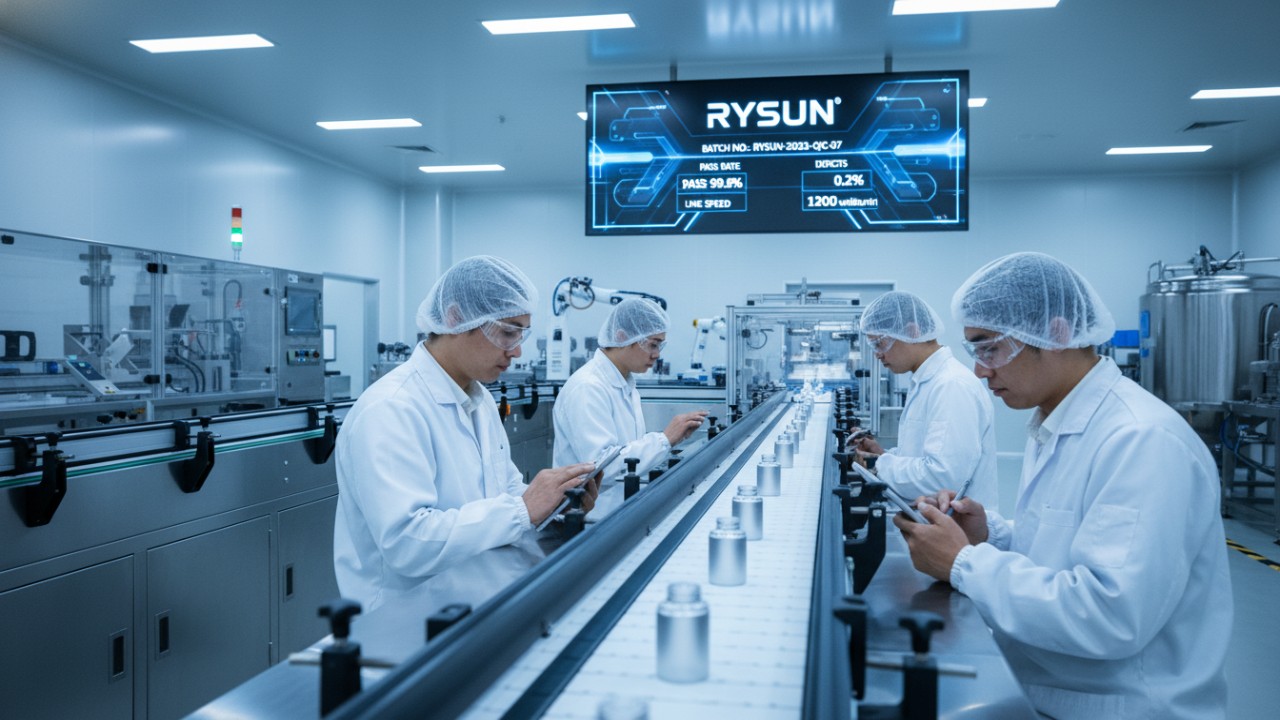
Labor and facility overhead costs cover the specialized workforce and high-tech cleanrooms required to safely mix, fill, cap, and seal your cosmetic products while maintaining strict regulatory quality standards.
These operational expenses are absolute non-negotiables in the beauty industry. Strict quality control ensures your products are safe for consumer use and legally compliant. At Rysun, our commitment to practical solutions and strict quality control means we implement up to 50 rigorous inspection procedures per product. Spanning dermatology, chemistry, microbiology, and pharmacology, this infrastructure guarantees exceptional safety and efficacy for all items, ranging from daily body lotion to specialized tanning products.
Direct facility and operational costs include:
- Direct Labor: Competitive wages for trained technicians operating the complex mixing and filling assembly lines.
- Facility Maintenance: Powering and sanitizing specialized cleanrooms and large-scale manufacturing equipment.
- Quality Assurance (QA): Routine batch testing, micro-bacterial swabs, and stability monitoring to prevent contamination.
Phase 5: Navigating Hidden Costs, Tariffs, and Compliance
Hidden costs in cosmetic manufacturing refer to the unbudgeted expenses for global regulatory registrations, Safety Data Sheets (SDS), freight fees, import duties, and mandatory third-party laboratory certifications.
It is incredibly common for new founders to completely overlook the hidden costs of launching a beauty brand. From paying thousands of dollars for detailed Product Information Files (PIF) to navigating volatile currency exchange risks in 2026, these peripheral elements quickly erode your budget. Furthermore, shipping raw materials to the production facility and transporting finished goods to your fulfillment warehouse incurs hefty freight rates and insurance policies that must be factored into your unit cost.
Crucial hidden fees to account for include:
- Regulatory Compliance: Toxicology reports and regional safety certifications (e.g., MoCRA in the US, CPNP in Europe).
- Freight and Logistics: International shipping container fees, palletizing, and last-mile delivery to warehouses.
- Insurance: Product liability insurance required by major retailers to protect against adverse consumer reactions.
Expert Tips & Common Budgeting Mistakes to Avoid
To avoid common budgeting mistakes, brands must account for the 10x retail markup rule, avoid over-customizing packaging on pilot runs, and clearly separate component costs from fill and assembly quotes.
A major oversight for new brands is failing to understand the true cost required to produce and sell their goods. The cost of goods sold is a critical accounting metric; it is the sum of all direct costs associated with selling a product, as reported by the U.S. Chamber of Commerce [3]. Calculating this incorrectly can lead to severe cash flow shortages.
Expert tips for ensuring a profitable product launch:
- The Markup Strategy: If your product costs $5 to manufacture, you generally need to price it at $50 to successfully cover marketing, overhead, and retailer margins.
- Demand Detailed Quotes: Always request transparency from your manufacturer on specific line items (separating formula from packaging).
- Smart Budget Allocation: Invest heavily in a superior formulation (like an effective face cream) rather than blowing the budget on overly complex, bespoke packaging.
- MOQ Management: You must balance upfront capital with long-term per-unit savings. Read our comprehensive private label cosmetics moq guide to strategize effectively, and remember that navigating your private label cosmetics minimum order quantity carefully is essential to maintaining healthy cash flow.
How Rysun Optimizes Your Cosmetics Manufacturing Budget
Rysun optimizes your manufacturing budget by combining over a decade of industry expertise, an in-house multidisciplinary R&D team, and large-scale operational efficiency to deliver affordable, high-quality cosmetic solutions.
Since 2014, Guangzhou Rysun Biotechnology Co., Ltd. has specialized in research-driven, end-to-end manufacturing. Operating under our established RYSUN brand name, we provide a highly predictable, transparent pricing model specifically designed to optimize your skincare contract manufacturing pricing. Whether your brand needs innovative face care products, luxurious cosmetics products, or targeted treatments, our professional team combines deep industry expertise with practical solutions to ensure every product meets the highest global standards without hidden fees.
Conclusion
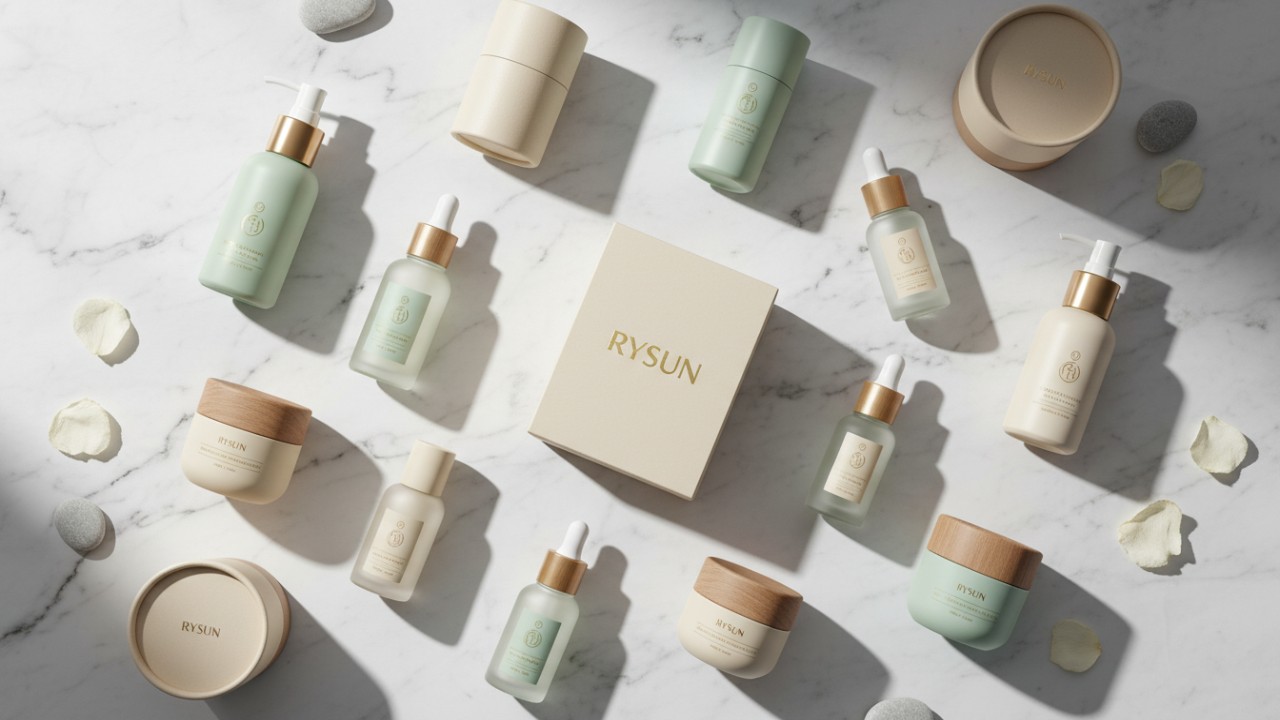
A transparent cosmetic manufacturing cost breakdown reveals that true expenses extend far beyond simple ingredients to include R&D, packaging, compliance, and strict quality control.
Understanding exactly where your capital is deployed allows you to price your products accurately and build a highly resilient business model. Partnering with a globally trusted manufacturer like Rysun—which possesses deep market insight, proprietary technology, and over a decade of hands-on experience—is the absolute best way to control your costs and ensure a highly successful, profitable product launch in 2026.
Contact us today at k.lee@rysunoem.com to optimize your cosmetic manufacturing cost breakdown strategy.
FAQs About cosmetic manufacturing cost breakdown
How much does it cost to start a cosmetics line in 2026?
Costs can range from $5,000 for a simple private label launch to over $100,000 for custom-formulated, highly-branded product lines. Factors like MOQs, active ingredients, and custom packaging molds heavily dictate the starting budget.
What is the average profit margin for cosmetic products?
Gross profit margins in the beauty industry typically range from 60% to 80%. To achieve this, brands usually price their retail products at 5 to 10 times the actual Cost of Goods Sold (COGS).
Is custom formulation more expensive than private label?
Yes, custom formulation is significantly more expensive upfront due to R&D lab time, stability testing, and sourcing unique ingredients. Private label uses pre-tested, established formulas, drastically reducing initial costs and time-to-market.
How do MOQs affect cosmetic manufacturing costs?
Minimum Order Quantities (MOQs) directly impact the per-unit cost. Higher MOQs lower the cost per item due to economies of scale. However, high MOQs require more upfront capital and increase the risk of carrying excess inventory.
What are the hidden costs in starting a skincare brand?
Hidden costs often include regulatory compliance testing, Safety Data Sheet (SDS) generation, custom packaging tooling fees, and freight/import tariffs. Insurance and unexpected marketing expenses also frequently catch new founders off guard.
How much should I budget for cosmetic packaging?
Packaging can account for 20% to over 40% of the total manufacturing cost. Sustainable materials, custom glass molds, and high-quality pumps or droppers will push this percentage to the higher end.
Does testing and compliance add significantly to production costs?
Yes, mandatory stability, challenge, and microbiological testing are essential to ensure consumer safety and avoid costly recalls. These testing phases require specialized lab work, which adds a fixed cost to the development phase.
How can I lower my cosmetic manufacturing costs without sacrificing quality?
Partner with an established OEM/ODM like Rysun that handles R&D, manufacturing, and QC in-house. Utilize stock packaging components with custom labeling instead of creating unique container molds.
Related articles


Get more information
If you have any comments or good suggestions, please leave us a message; later our professional staff will contact you as soon as possible.
Rysun Biotechnology--Unremittingly strive for human health and beauty
Contact RYSUN
Email: k.lee@rysunoem.com
WhatsApp: +86 156 0306 9138
Address: No. 62 Nanxiang First Road, Science Town of Guangzhou Developed Zone, Huangpu, Guangzhou, China.
© 2025 RYSUN. All Rights Reserved. Privacy Policy | Terms and Conditions | Sitemap
Facebook
Instagram