



Why Is Salicylic Acid Not Working? A Practical Guide for Skincare Brands and Product Developers
Discover why salicylic acid may not be working and how skincare brands can improve formulation, delivery, and efficacy for better acne treatment results.
Why Is Salicylic Acid Not Working? A Complete Industry Guide
Salicylic acid is one of the most trusted ingredients for treating acne and oily skin. As a beta hydroxy acid (BHA), it penetrates deep into pores, dissolving excess sebum and clearing congestion.
However, many consumers report that salicylic acid is “not working”, leading to dissatisfaction and product switching.
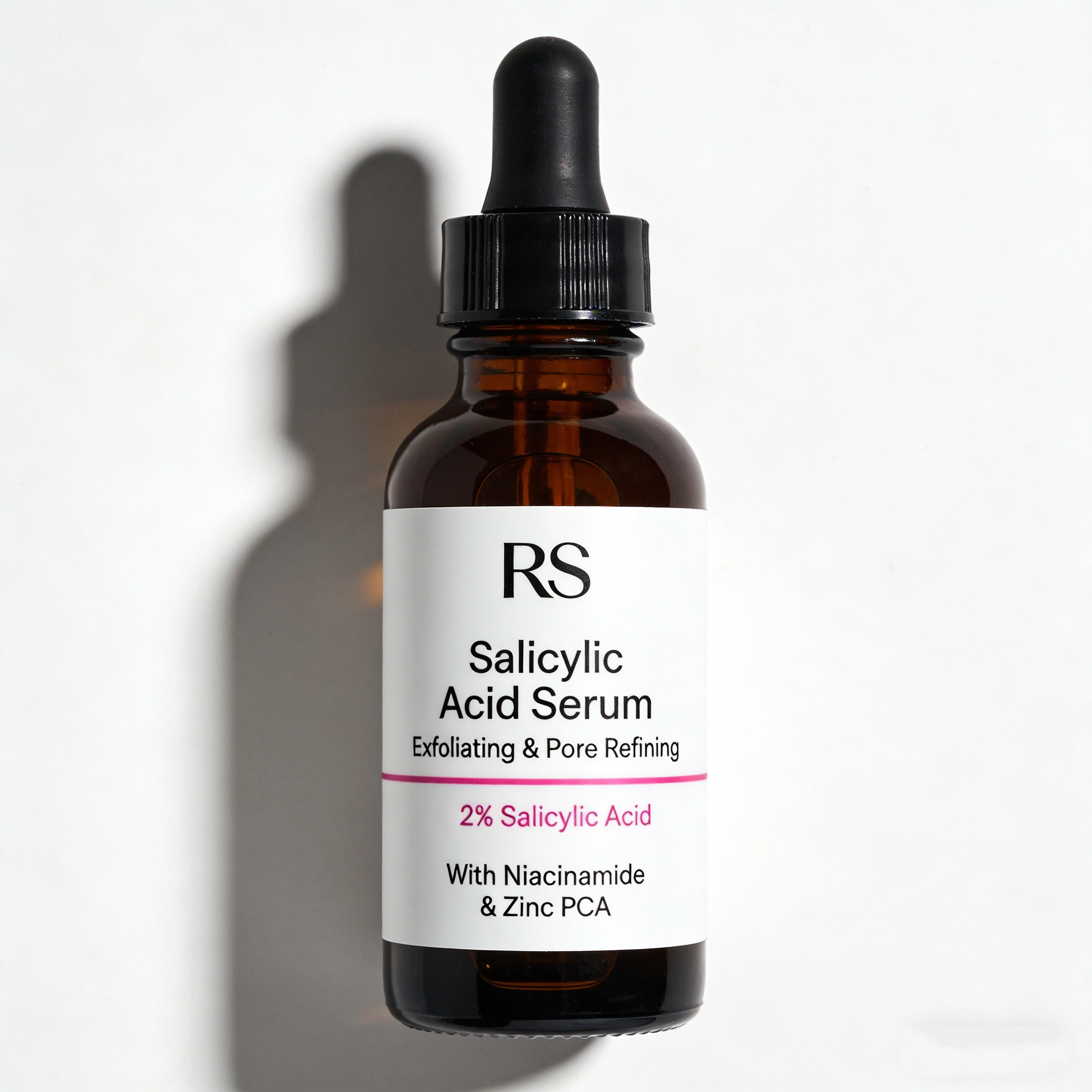
For skincare brands, this presents both a challenge and an opportunity. Understanding the underlying reasons allows for better product design, clearer user guidance, and stronger market performance. Here is our private label Salicylic Acid serum, pls click he/private-label-salicylic-acid-serum.htmlre for more details.
1. Incorrect Concentration Levels
One of the most common reasons for poor performance is suboptimal concentration.
- Too low → insufficient exfoliation
- Too high → irritation, leading to discontinuation
Industry Insight:
Most effective formulations fall within:
- 0.5%–2% salicylic acid (depending on product type and region)
Development Strategy:
Rather than relying on a single strength, brands can:
- Create tiered product lines (beginner to advanced)
- Adjust concentration based on target skin type
2. Poor Solubility and Delivery System
Salicylic acid is oil-soluble but difficult to dissolve in water-based systems, making formulation more complex.
If not properly solubilized:
- It may crystallize
- Reduce bioavailability
- Deliver inconsistent results
Formulation Insight:
Effective products often use:
- Solubilizers or co-solvent systems
- Encapsulation or controlled-release technologies
- Optimized emulsions for even distribution
A well-designed delivery system significantly impacts performance.
3. Incorrect pH Range
Salicylic acid requires an acidic environment to remain active.
- Optimal pH: 3.0–4.0
- Higher pH → reduced efficacy
B2B Consideration:
Balancing pH is critical:
- Too low → irritation risk
- Too high → ineffective exfoliation
Precision in pH adjustment ensures both performance and tolerability.
4. Insufficient Usage Time or Frequency
Another key reason is improper usage habits:
- Infrequent application
- Stopping too early
- Rinsing off too quickly (in cleansers)
Consumer Behavior Insight:
Salicylic acid often requires:
- Consistent use over 2–6 weeks
- Leave-on formulations for stronger results
Brand Strategy:
Clear instructions and routine guidance can:
- Improve compliance
- Enhance perceived effectiveness
- Reduce negative reviews
5. Not Targeting the Right Skin Concern
Salicylic acid is highly effective for:
- Oily skin
- Blackheads and whiteheads
- Mild to moderate acne
However, it is less effective for:
- Dry skin concerns
- Deep cystic acne
- Pigmentation or dullness
Product Positioning Insight:
Mismatch between product claims and actual function is a major cause of dissatisfaction.
Brands should:
- Define clear use cases
- Avoid overgeneralized marketing
- Segment products by skin concern
6. Skin Barrier Damage or Overuse
Overuse of salicylic acid can lead to:
- Dryness
- Irritation
- Compromised skin barrier
This creates a cycle where:
- Skin becomes more sensitive
- Acne may worsen
Development Perspective:
Modern formulations increasingly combine:
- Exfoliation + barrier support
- Humectants and soothing agents
This approach improves long-term usability and user experience.
7. Lack of Complementary Ingredients
Salicylic acid alone may not address all acne-related factors.
Effective acne formulations often include:
- Anti-inflammatory agents (niacinamide)
- Sebum regulators
- Hydrating components
Innovation Opportunity:
Multi-functional formulations deliver:
- Better overall results
- Reduced irritation
- Broader consumer appeal
8. Unrealistic Expectations from Consumers
Many users expect immediate results, but salicylic acid works gradually.
Typical timeline:
- Week 1–2: Adjustment phase
- Week 3–6: Visible improvement
Brand Communication Strategy:
Educating users about realistic timelines:
- Builds trust
- Reduces product abandonment
- Improves satisfaction rates
How Skincare Brands Can Improve Salicylic Acid Performance
To ensure better product success, brands should focus on:
1. Advanced Formulation Design
- Optimize solubility and stability
- Use controlled-release systems
- Balance efficacy with skin comfort
2. Targeted Product Segmentation
- Acne-focused lines
- Sensitive skin alternatives
- Maintenance vs treatment products
3. User-Centric Product Experience
- Clear instructions
- Gradual usage recommendations
- Texture and absorption optimization
4. Scalable and Flexible Development
Working with an experienced manufacturing partner enables:
- Custom concentration adjustments
- Adaptation to different regulatory markets
- Efficient transition from concept to mass production
Conclusion
When salicylic acid is not working, the issue is rarely the ingredient itself. Instead, it often comes down to formulation design, incorrect usage, or mismatched expectations.
For skincare brands, this creates a valuable opportunity to differentiate through precision formulation, better education, and targeted product development. By addressing these factors, brands can significantly improve product performance, customer satisfaction, and long-term market success.
FAQs
1. How long does salicylic acid take to work?
Typically, visible improvements appear within 2–6 weeks of consistent use.
2. Can salicylic acid stop working over time?
It doesn’t stop working, but skin needs may change. Adjusting formulation strength or routine can help maintain results.
3. Why does salicylic acid make acne worse at first?
This may be due to purging, where clogged pores surface more quickly before improving.
4. Is higher concentration always better?
No. Higher concentrations can cause irritation without improving results. Balanced formulation is key.
5. What can enhance salicylic acid effectiveness?
Combining it with soothing, hydrating, and anti-inflammatory ingredients improves overall performance and tolerability.
Related articles
Get more information
If you have any comments or good suggestions, please leave us a message; later our professional staff will contact you as soon as possible.
Rysun Biotechnology--Unremittingly strive for human health and beauty
Contact RYSUN
Email: k.lee@rysunoem.com
WhatsApp: +86 156 0306 9138
Address: No. 62 Nanxiang First Road, Science Town of Guangzhou Developed Zone, Huangpu, Guangzhou, China.
© 2025 RYSUN. All Rights Reserved. Privacy Policy | Terms and Conditions | Sitemap
Facebook
Instagram