


Customs, Tariffs, and Timelines: Safely Importing Cosmetics from China in 2026
Global supply chains have experienced unprecedented shifts, bringing new compliance frameworks and tariff structures that directly impact beauty brands. Mastering the process of importing cosmetics from china is now more critical than ever. Whether you are launching a startup or managing an enterprise-level brand, understanding the intersection of updated U.S. and EU regulations with international trade laws is paramount. This definitive guide delivers actionable insights into customs clearance, tariff calculation, and sourcing strategies, providing you with a reliable roadmap for a compliant and highly profitable 2026.
What Does Importing Cosmetics From China Require?
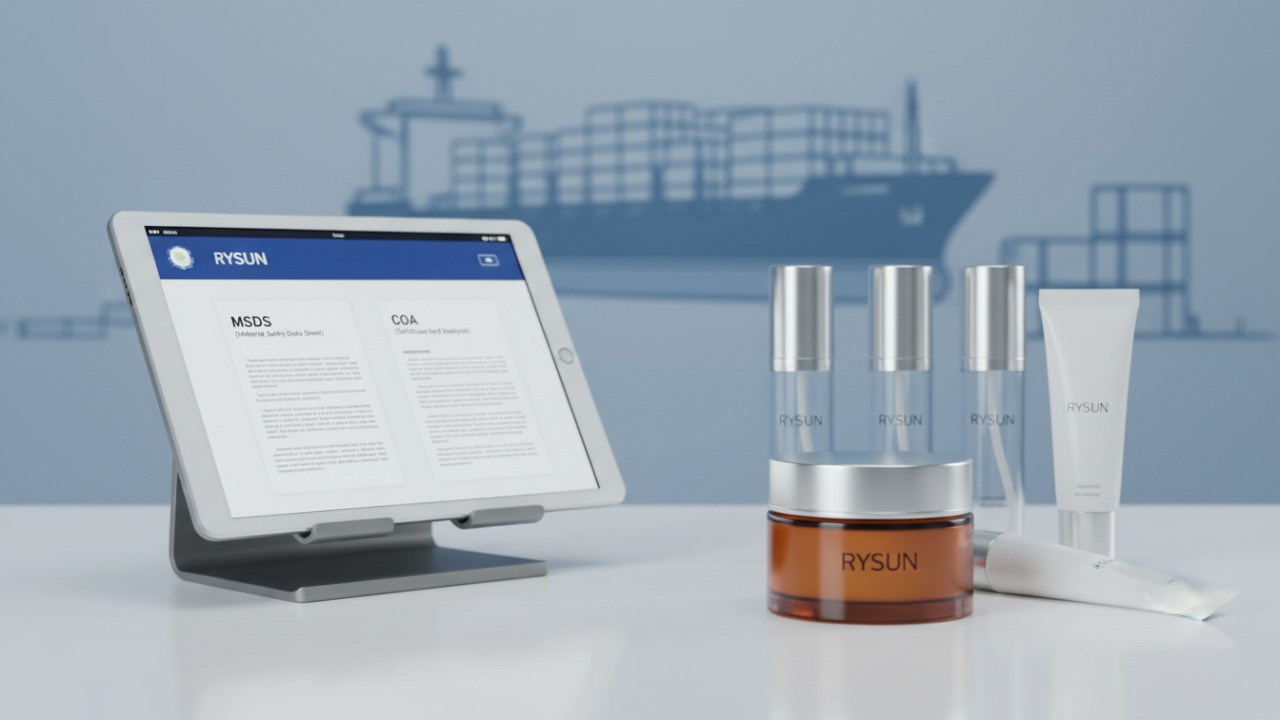
Importing cosmetics from China requires navigating a complex process of sourcing reliable OEM/ODM manufacturers, ensuring strict regulatory compliance, and managing international shipping logistics. It involves clearing customs, paying applicable tariffs, and providing essential documentation like MSDS and COA to guarantee legality.
To succeed in the current global market, brands must approach their supply chain as an interconnected ecosystem. Skipping even a minor compliance step can result in costly border delays or total product seizure. When you begin your import journey, it is vital to secure the exact paperwork your freight forwarders and customs brokers will demand upon entry. The most critical aspect of this involves verifying that the physical products perfectly match their declared components.
- Supplier Qualification: Vetting factories for ISO 22716 and GMPC certifications to ensure they meet global safety benchmarks.
- Logistics & Customs: Selecting the optimal shipping routes and proactively preparing all necessary customs declarations.
- Documentation Management: Keeping updated Material Safety Data Sheets (MSDS) and Certificates of Analysis (COA) on hand for every single SKU.
Key Takeaways for 2026 Beauty Importers
The key to safely importing beauty products in 2026 involves mandatory compliance with MoCRA for the US market, precise Harmonized System (HS) tariff classification to minimize costs, and sourcing from research-driven manufacturers to significantly reduce legal and financial risks.
As trade environments evolve, importers can no longer rely on outdated playbooks. Strategies that worked in 2023 will likely trigger audits today. The modernization of the beauty industry's legal framework has heightened the barrier to entry, rewarding brands that emphasize rigorous quality control. It is no longer enough to just find an affordable supplier; your factory partner must act as a legal co-pilot.
- Mandatory Registration: MoCRA compliance is now an absolute necessity, requiring complete facility registration and comprehensive product listing.
- Cost Efficiency: Accurately classifying goods under the correct HS Codes protects your unit economics from unexpected border fees.
- IP Protection: Partnering with an OEM that has established intellectual property and independent testing protocols ensures you aren't hit with infringement lawsuits upon import.
Navigating Customs and Compliance: FDA, MoCRA, and CSAR
Navigating global customs demands strict adherence to the FDA's Modernization of Cosmetics Regulation Act (MoCRA), the EU's 1223/2009 regulation, and China's CSAR framework to verify that your supplier operates legally and manufactures safe, unadulterated products.
The landscape for FDA compliance for imported makeup has dramatically changed. The historical Voluntary Cosmetic Registration Program (VCRP) has been fully replaced. Under the new system, both domestic and foreign facilities that manufacture products for U.S. distribution must be registered, as reported by the Food and Drug Administration. The definition of these products is broad; they are substances intended for application to the body for cleansing, beautifying, or altering appearance, as detailed on Wikipedia.
Furthermore, MoCRA requirements 2026 stipulate that brands designate a "Responsible Person" to maintain safety substantiations and manage severe adverse event reporting. Simultaneously, verifying your Chinese manufacturer's standing under the National Medical Products Administration (NMPA) and Cosmetic Supervision and Administration Regulation (CSAR) ensures you are working with a vetted entity.
- US Market (MoCRA): Mandatory facility registration, mandatory product listing, and stringent adverse event reporting protocols.
- EU Market (1223/2009): Requires a designated Responsible Person in the EU and detailed Product Information Files (PIF).
- China Market (CSAR): Ensures that the exporting factory passes strict domestic safety assessments and holds a valid production license.
Tariffs and Shipping Costs: Calculating Your Bottom Line
Calculating your total landed cost requires analyzing standard customs duties, factoring in Section 301 tariffs, comparing volumetric weights across air and sea freight, and accounting for hidden brokerage and warehouse handling fees.
When purchasing wholesale cosmetics from china, understanding the mechanics of shipping beauty products from china is what separates profitable brands from failed ones. Geopolitical shifts have reinforced specific trade barriers. Specifically, the continued enforcement and strategic adjustment of Section 301 measures heavily influence unit margins, according to the Tax Policy Center. If your products fall under specific targeted categories, you may face an additional 25% duty on top of the standard rates.
| Shipping Method | Average Transit Time | Cost Level | Best Use Case |
|---|---|---|---|
| Air Freight (Express) | 5 to 10 Days | High ($$$) | Urgent product launches, trend-chasing inventory, or shipments under 200kg. |
| Ocean Freight (LCL) | 25 to 40 Days | Medium ($$) | Mid-sized commercial orders that don't fill a complete container. |
| Ocean Freight (FCL) | 25 to 40 Days | Low ($) | Large volume commercial orders; offers the best unit economics for heavy liquids. |
- Harmonized System (HS) Codes: Ensure your products use the exact classification (e.g., 3304.99 for beauty/skincare) to avoid arbitrary overcharging.
- Fuel Surcharges: Always ask your freight forwarder to lock in rates or clarify variable fuel costs.
- Hidden Fees: Watch out for unexpected port congestion fees, warehouse un-stuffing fees, and customs examination charges.
Partnering with Experts: How RYSUN Guarantees Import Compliance
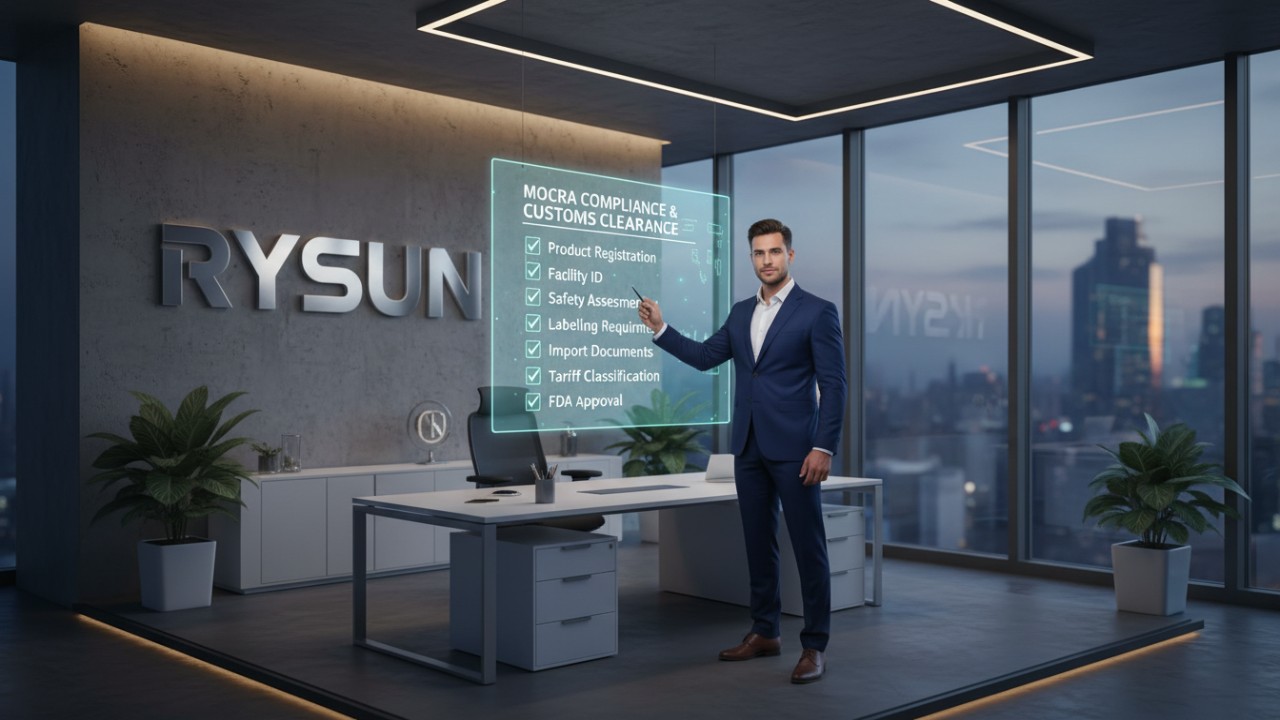
Working with Guangzhou Rysun Biotechnology Co., Ltd. secures comprehensive import compliance by leveraging over a decade of manufacturing experience, a deeply skilled R&D institute, and 50 rigorous inspection procedures per product.
Successfully navigating china cosmetics import regulations requires more than a standard trading company; it requires a strategic manufacturer. Founded in 2014 by Ivy Wong to address inconsistent quality in the skincare market, RYSUN has grown into a world-class OEM/ODM partner. By establishing its Research Institute in 2015, the company brought together doctors, professors, and specialists in dermatology, microbiology, and pharmacology.
- Global Export Expertise: Having partnered with over 700 brands across more than 50 countries, RYSUN possesses deep insights into regional compliance.
- Proprietary Innovation: RYSUN is backed by 105 product patterns and 253 intellectual properties, spearheaded by 20 leading scientific researchers.
- Unmatched Quality Control: Implementing up to 50 strict inspection procedures guarantees every formula exceeds FDA and EU safety benchmarks before leaving the port.
Realistic Timelines: From Formulation to Freight
A realistic timeline spans 2 to 4 weeks for formulation and sampling, 30 to 45 days for standard OEM production, and 5 to 40 days for transit depending on your chosen freight mode.
Failure to plan production schedules leads to stockouts and lost revenue. In the cosmetics industry, rushing production usually results in compromised stability testing or packaging errors. Importers must account for every phase of the product lifecycle. When negotiating these timelines and production scales, reviewing a detailed private label cosmetics moq guide will help you structure your purchase orders effectively.
- R&D and Sampling Phase (2-4 Weeks): This critical initial phase covers custom formulation, accelerated stability testing, and packaging mockups to verify component compatibility.
- Production Phase (30-45 Days): Standard manufacturing lead times depend heavily on raw material sourcing and the complexity of your custom packaging.
- Transit Phase (5-40 Days): Expect rapid 5-10 day turnarounds for air express, while cost-effective ocean freight (LCL/FCL) requires a 25-40 day buffer.
Expert Tips & Common Mistakes When Sourcing Cosmetics
Avoiding expensive sourcing mistakes involves meticulously verifying a supplier's GMPC certifications, ensuring all ingredient labels adhere to INCI standards, and maintaining up-to-date MSDS documentation for smooth shipping.
A single labeling error can cause your entire shipment to be flagged and held at the border. Customs agents are highly trained to identify discrepancies between the physical product, the label, and the commercial invoice. Importers must operate with total transparency.
- Mistake: Failing to verify a supplier's ISO 22716 or GMPC certifications before wiring a deposit. Always demand the original certificates and verify their validity.
- Tip: Always request a comprehensive Material Safety Data Sheet (MSDS) and Certificate of Analysis (COA) prior to booking your freight to prevent transit holds.
- Mistake: Overlooking strict labeling requirements. Ensure that all ingredient lists follow international INCI standards and include required country-of-origin markings (e.g., "Made in China").
Conclusion
Safely importing cosmetics from China in 2026 demands strict adherence to evolving global regulations, precise tariff calculation, and partnering with an experienced OEM to build profitable, compliant product lines.
The era of effortless overseas sourcing has been replaced by an environment that rewards meticulous compliance and strong supplier relationships. From absorbing Section 301 tariffs to managing MoCRA facility registrations, the modern importer must act strategically. By aligning with a highly certified, research-driven manufacturer like Guangzhou Rysun Biotechnology Co., Ltd., brands can bypass common pitfalls, ensure consumer safety, and scale their product lines with supreme confidence. Contact us today to optimize your importing cosmetics from china strategy.
FAQs About importing cosmetics from china
Do I need a license to import cosmetics from China to the US?
You do not need a specific importer's license, but you must comply with FDA regulations and ensure your manufacturer is registered under MoCRA. A customs bond is required if the value of your commercial shipment exceeds $2,500.
How much are customs duties on cosmetics from China?
Standard duty rates for cosmetics typically range from 0% to 5%, but Section 301 tariffs may add an additional 25% depending on the exact HS code. Consulting with a licensed customs broker is recommended for accurate landed cost calculations.
What is an MSDS and why do I need it for shipping?
A Material Safety Data Sheet (MSDS) details the chemical composition, hazards, and handling instructions of a product. Freight forwarders and customs officials require an MSDS to ensure the cosmetics do not contain restricted hazardous materials during transit.
Are Chinese cosmetics FDA approved?
The FDA does not 'approve' cosmetics before they go to market, except for color additives. However, cosmetics imported from China must be FDA-compliant, meaning they are unadulterated, properly labeled, and manufactured in a registered facility.
How do I verify a cosmetic manufacturer in China?
Request copies of their business license, ISO 22716 certification, and GMPC compliance documents. Partner with transparent companies like Guangzhou Rysun Biotechnology that openly share their R&D capabilities, patents, and factory inspection protocols.
What is the cheapest way to ship cosmetics from China?
Sea freight (LCL or FCL) is the most cost-effective method for large, heavy commercial orders. For smaller or urgent shipments under 200kg, express courier or standard air freight is faster but more expensive.
Can I import branded cosmetics like Perfect Diary or Florasis?
Yes, but you must have explicit authorization or distributor rights from the brand owner to clear customs and sell them legally. Without proper authorization, customs may seize the goods under suspicion of counterfeiting.
How does MoCRA affect importing cosmetics in 2026?
MoCRA makes facility registration and product listing mandatory for all cosmetics sold in the US. Importers must ensure their Chinese manufacturers provide serious adverse event reporting and keep rigorous safety substantiation records.
Related articles
Get more information
If you have any comments or good suggestions, please leave us a message; later our professional staff will contact you as soon as possible.
Rysun Biotechnology--Unremittingly strive for human health and beauty
Contact RYSUN
Email: k.lee@rysunoem.com
WhatsApp: +86 156 0306 9138
Address: No. 62 Nanxiang First Road, Science Town of Guangzhou Developed Zone, Huangpu, Guangzhou, China.
© 2025 RYSUN. All Rights Reserved. Privacy Policy | Terms and Conditions | Sitemap
Facebook
Instagram