


Top Quality Criteria for Bulk Vanilla Body Oil Procurement
- Top Quality Criteria for Bulk Vanilla Body Oil Procurement
- Why vanilla body oil is a distinct category in bulk cosmetic sourcing
- Product snapshot: Private Label Vanilla Body Oil
- 1. Ingredient quality and source: vanilla as a bioactive and aromatic
- 2. Carrier oil selection: why Meadowfoam Seed Oil matters
- Carrier oils comparison (practical procurement table)
- 3. Analytical testing and specification sheet essentials
- 4. Stability, packaging, and shelf-life considerations for bulk lots
- 5. Regulatory compliance and labeling considerations
- 6. Supply chain transparency, traceability and sustainability
- 7. Commercial terms, MOQ and manufacturing flexibility
- 8. Quality control at receipt and ongoing batch testing
- 9. Supplier evaluation checklist
- 10. Brand positioning and Private Label Vanilla Body Oil advantages
- 11. Practical procurement timeline and milestones
- Frequently Asked Questions (FAQ)
- Q: What makes meadowfoam seed oil superior for vanilla body oil?
- Q: Can you label vanilla body oil as antioxidant or anti-inflammatory?
- Q: Is synthetic vanillin acceptable for a High Quality vanilla body oil?
- Q: What is the typical MOQ for private-label vanilla body oil?
- Q: How should I test a new batch upon receipt?
- Contact us / See the product
- Authoritative references and further reading
Top Quality Criteria for Bulk Vanilla Body Oil Procurement
Why vanilla body oil is a distinct category in bulk cosmetic sourcing
Vanilla body oil occupies a High Quality niche in the skincare market: it combines fragrance, sensory experience and detectable bioactivity. Buyers looking to procure vanilla body oil in bulk must evaluate more than scent — they must assess antioxidant and anti-inflammatory activity, oxidative stability, fixative behavior on skin, ingredient traceability and regulatory compliance. For brands planning a retail or spa-positioned product, commercial keywords such as vanilla body oil and Private Label Vanilla Body Oil represent buyer intent: purchasers want a product that performs on skin while delivering the olfactory signature of vanilla.
Product snapshot: Private Label Vanilla Body Oil
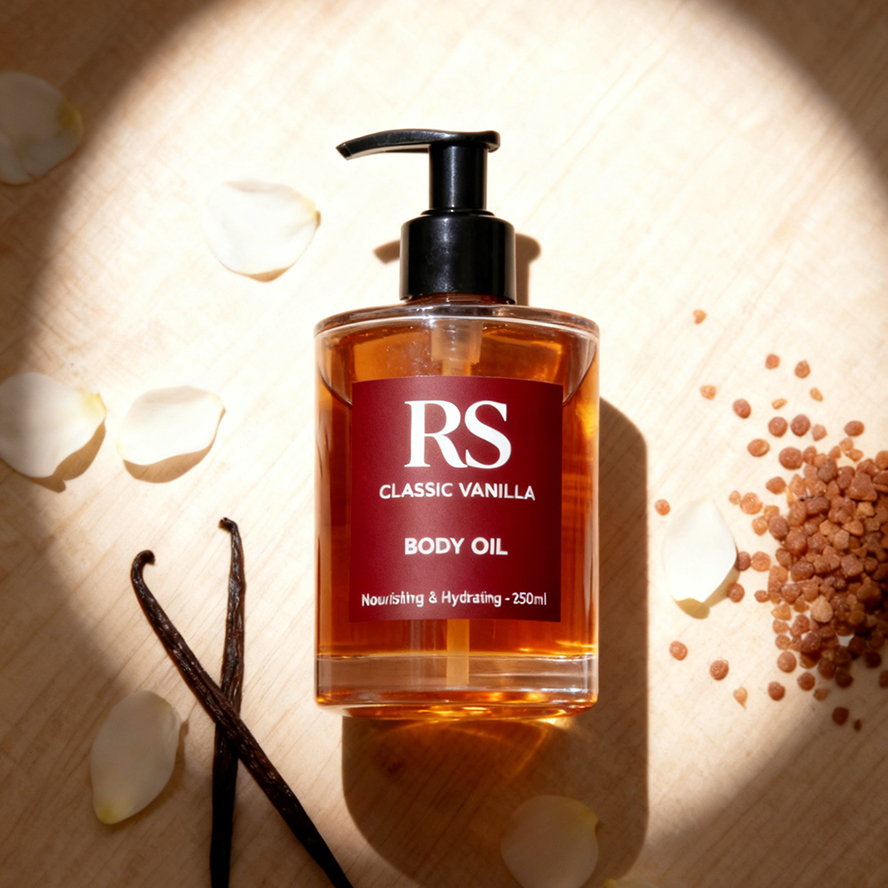
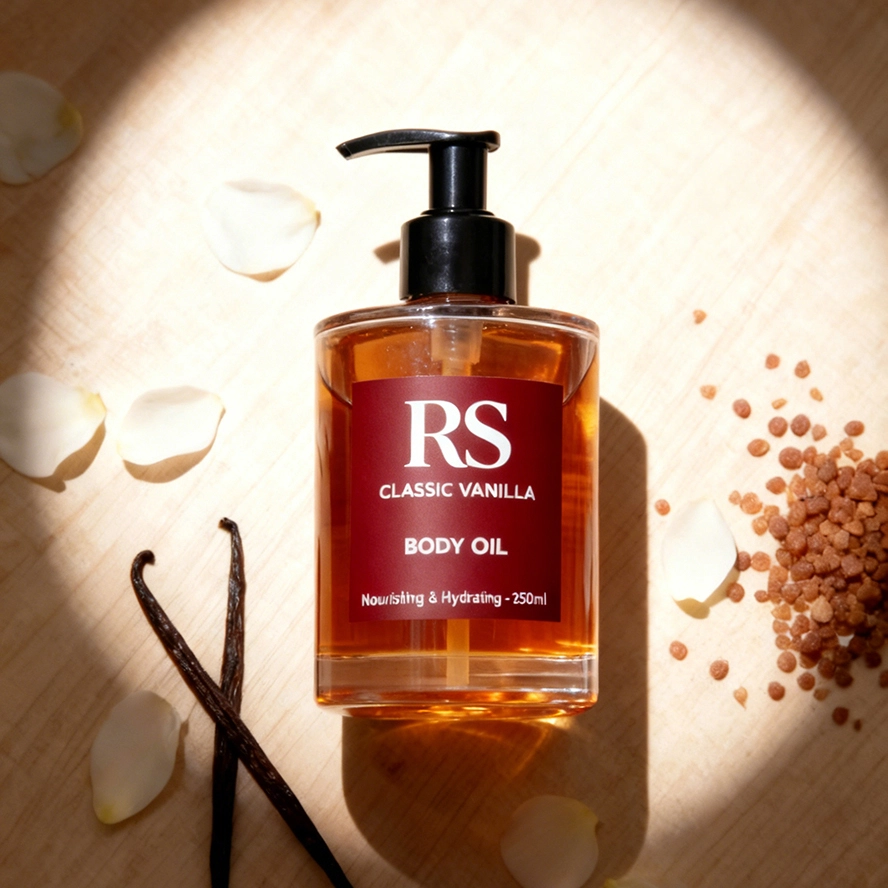
A luxury body treatment that uses Vanilla Oil and high-stability carrier oils. This product treats Vanilla as a bioactive ingredient, not just a perfume, giving a warm complexity of vanilla while delivering structural skin repair.
In the formula, we use vanilla oil as it is a natural antioxidant and anti-inflammatory. And the main carrier oil we use Meadowfoam Seed Oil, is unique because of its incredible oxidative stability. It acts as a natural fixative, locking the volatile vanilla compounds onto the skin so the scent lasts for hours.
This is a luxury body oil that gives you not only Sensory satisfaction but also like a spa treatment.
MOQ for this private label Vanilla Body Oil is 1000 units, custom formulas are available.
1. Ingredient quality and source: vanilla as a bioactive and aromatic
When procuring vanilla body oil in bulk, insist on documented origin for vanilla ingredients. Vanilla can be supplied as whole vanilla CO2 extract, absolute, or as isolated vanillin (natural vs synthetic). Each form has implications:
- Vanilla CO2 / Absolute: richer aromatic profile and fuller bioactive content (phenolics). Higher cost, more complex aroma and stronger antioxidant potential.
- Vanillin (natural or synthetic): provides a dominant sweet note with lower complexity. Natural vanillin derived from vanilla beans or from biobased processes may command High Quality pricing and labeling advantages.
- Fractionated or synthetic vanillin alone lacks the entourage of minor compounds that confer antioxidant and anti-inflammatory benefits.
Procurement best practice: request GC-MS chromatograms and Certificates of Analysis (CoA) showing vanillin percentage and phenolic markers; require a Supplier Declaration of Origin and whether the vanilla is natural (vanilla planifolia) or blended.
2. Carrier oil selection: why Meadowfoam Seed Oil matters
Carrier oils determine oxidization resistance, sensory feel, absorption and scent longevity. Meadowfoam Seed Oil (Limnanthes alba) is favored in luxury vanilla body oils because of its exceptional oxidative stability and light, non-greasy feel. It functions as a natural fixative, helping volatile vanilla compounds remain on the skin longer — a critical commercial attribute for vanilla body oil products.
Carrier oils comparison (practical procurement table)
| Attribute | Meadowfoam Seed Oil | Jojoba Oil | Fractionated Coconut (MCT) |
|---|---|---|---|
| Oxidative stability | High — excellent shelf and skin stability | High — stable, long shelf life | Moderate — stable but lighter VOC profile |
| Scent fixative effect | Strong — locks volatiles on skin | Moderate | Lower — scent dissipates faster |
| Skin feel | Silky, non-greasy | Silky, slightly waxy | Dry, fast-absorbing |
| Typical cost (relative) | High Quality | Mid to High Quality | Lower |
3. Analytical testing and specification sheet essentials
Any reputable supplier will provide a complete specification (spec) and analytical package. Minimum documentation to require when buying vanilla body oil in bulk:
- Certificate of Analysis (CoA) with batch-specific results: refractive index, acid value, peroxide value, saponification value, specific gravity, and microbial limits.
- GC-MS profile for vanilla oil to confirm the composition and identify adulterants.
- Stability data: accelerated stability (e.g., 40°C for 4 weeks) to predict shelf life and fragrance retention, especially important for formulations claiming scent longevity.
- Heavy metals testing (lead, arsenic, cadmium, mercury) and pesticide residues, particularly for natural vanilla sourced from agricultural supply chains.
- Oxidation markers: peroxide value and anisidine value for carrier oils to monitor rancidity risk.
Requiring these documents upfront prevents surprises and supports claims like “antioxidant” or “anti-inflammatory” in marketing copy, because those claims should be backed by either ingredient literature or in vitro data.
4. Stability, packaging, and shelf-life considerations for bulk lots
Vanilla volatile components can be fragile. Packaging choices significantly affect quality during storage and distribution. Key procurement checkpoints:
- Packaging material: use amber glass or metallized barriers to reduce light oxidation. High-barrier HDPE with inner liners can work for large-volume containers, but glass is preferred for finished retail oil.
- Headspace control: minimize oxygen exposure in drums/totes; use nitrogen blanketing for long-term storage.
- Antioxidant strategy: while vanilla offers natural antioxidant activity, consider synergistic natural antioxidants (e.g., tocopherols) if compatible with claims.
- Storage conditions: require stable storage at controlled temperature (e.g., 15–25°C) and specify maximum shelf life and recommended in-use period after opening.
5. Regulatory compliance and labeling considerations
Cosmetic regulations vary by market, but some procurement fundamentals apply globally:
- IFRA standards and fragrance ingredient restrictions — verify supplier compliance if vanilla extracts or fragrance ingredients are included.
- Cosmetic ingredient registration and safety assessments — ensure an up-to-date Product Information File (PIF) or Cosmetic Safety Report is available for finished Private Label Vanilla Body Oil formulations intended for the EU or UK markets.
- Claims substantiation — if marketing as antioxidant or anti-inflammatory, have the supporting literature or test data on file to justify the claim and avoid misleading consumers.
- Allergen labeling — even natural vanilla can carry potential allergenic constituents; ensure IFRA and local labeling rules are followed.
6. Supply chain transparency, traceability and sustainability
Buyers increasingly demand traceability and ethical sourcing. For vanilla body oil procurement, request:
- Supply chain map and specific country of origin for vanilla beans and carrier oil seeds.
- Social compliance certificates or audits (e.g., SMETA, BSCI) if social sourcing is a brand priority.
- Certificates for organic, fair-trade or regenerative sourcing if required by RYSUN positioning.
Traceability supports High Quality marketing (e.g., single-origin vanilla) and reduces reputational risk.
7. Commercial terms, MOQ and manufacturing flexibility
Commercial parameters affect supplier selection as much as technical quality. Important procurement items:
- MOQ (Minimum Order Quantity): For the Private Label Vanilla Body Oil described above, the MOQ is 1000 units. Confirm MOQs for raw vanilla ingredients and carrier oils as well.
- Custom formulation capability: confirm the supplier can adjust vanilla concentration, carrier oil ratio or sensory profile and can provide stability testing for custom formulas.
- Lead times and inventory strategy: vanilla bean shortages and seasonal supply variability can extend lead times. Negotiate safety stock levels to secure uninterrupted production.
- Price drivers: natural vanilla availability, carrier oil selection (e.g., meadowfoam High Quality cost), packaging choices and testing requirements all impact cost.
8. Quality control at receipt and ongoing batch testing
On arrival of bulk vanilla body oil or concentrates, implement a QC acceptance protocol:
- Compare incoming CoA to requested spec and verify batch numbers.
- Spot-check GC-MS profile and key physico-chemical parameters (peroxide value, microbial limits).
- Document visual inspection for clarity, sediment or phase separation.
- Keep retained samples for at least one production cycle for traceability and complaint resolution.
9. Supplier evaluation checklist
Use a scorecard when comparing suppliers. Elements to score:
- Technical documentation (CoA, GC-MS, stability) — 25%
- Supply chain traceability and sustainability credentials — 15%
- Regulatory and safety compliance (IFRA, PIF availability) — 15%
- Lead time, MOQ flexibility and custom formula capability — 15%
- Price competitiveness and total landed cost — 15%
- Customer service, QC response time and audit transparency — 15%
10. Brand positioning and Private Label Vanilla Body Oil advantages
For brands, choosing the right supplier for Private Label Vanilla Body Oil is more than an ingredient purchase — it's a product platform. Key advantages of sourcing a high-quality private-label vanilla body oil:
- Speed to market: finished or semi-finished private-label oils can shorten development time and reduce CAPEX.
- Consistency: a vetted private-label formula offers repeatable sensory and stability performance across runs.
- Customization: many private-label manufacturers will work within MOQ limits (e.g., 1000 units) to adjust scent strength, carrier profiles and packaging to fit brand identity.
- Regulatory support: experienced private-label partners supply documentation needed for different markets, including PIF and safety assessments.
When the product brief calls for a luxury sensory experience combined with measurable skin benefits, products that treat vanilla as a bioactive — such as the Private Label Vanilla Body Oil — offer a clear market advantage: they permit claims about antioxidant support while delivering a long-lasting vanilla scent due to stable carrier oil selection.
11. Practical procurement timeline and milestones
Typical timeline when ordering a custom private-label vanilla body oil:
- Initial supplier qualification and NDA — 1–2 weeks.
- Sample formulation and speed-stability test — 2–4 weeks.
- Regulatory review and labeling preparation — 1–2 weeks (may overlap).
- Production lead time (first run, MOQ 1000 units) — 4–8 weeks depending on capacity, ingredient lead times.
- Quality release and shipping — 1–2 weeks.
Plan for 8–16 weeks from first contact to finished goods in hand for a custom Private Label Vanilla Body Oil.
Frequently Asked Questions (FAQ)
Q: What makes meadowfoam seed oil superior for vanilla body oil?
A: Meadowfoam seed oil has unusually high oxidative stability and a light sensory profile. It acts as a natural fixative for vanilla volatiles, improving scent longevity and extending shelf life relative to many other carrier oils.
Q: Can you label vanilla body oil as antioxidant or anti-inflammatory?
A: Only if you have supporting evidence. Use supplier literature, published studies on vanilla extracts, or in-house testing to substantiate claims. Regulatory requirements differ by market, so ensure claims are defensible and documented.
Q: Is synthetic vanillin acceptable for a High Quality vanilla body oil?
A: Synthetic vanillin can provide a strong vanilla odor at lower cost, but it lacks the complex minor compounds that contribute antioxidant and anti-inflammatory activity and the High Quality marketing appeal of natural vanilla extract. Choose based on claim strategy, price constraints and target market expectations.
Q: What is the typical MOQ for private-label vanilla body oil?
A: For the Private Label Vanilla Body Oil product described, the MOQ is 1000 units. MOQs vary by manufacturer and can depend on packaging, labeling and whether a custom formula is requested.
Q: How should I test a new batch upon receipt?
A: Verify CoA, perform spot checks for peroxide value and GC-MS markers, inspect packaging and store a retained sample. If possible, run accelerated stability tests on a finished formula sample before large-scale launch.
Contact us / See the product
Ready to procure or private-label a High Quality vanilla body oil? Our Private Label Vanilla Body Oil is available with an MOQ of 1000 units and customizable formulas to suit RYSUN positioning. Contact our sales team to request samples, detailed specs, and lead times. After setting quality expectations, buyers must ensure their sourcing strategy aligns with regulations by following a thorough regulatory checklist for private label vanilla body oil.
Authoritative references and further reading
- Vanilla — Wikipedia: https://en.wikipedia.org/wiki/Vanilla
- Limnanthes alba (Meadowfoam) — Wikipedia: https://en.wikipedia.org/wiki/Limnanthes_alba
- International Fragrance Association (IFRA) — https://ifrafragrance.org
- Cosmetics Europe — The Personal Care Association — https://www.cosmeticseurope.eu
Best Natural Body Lotions for Men Buyers

Sustainable Packaging & Branding for Private Label Curly Hair Masks

Essential Certifications for Private Label Argan Oil for Fine Hair
Certifications to Request for Hair Oil for Dry Hair
Face Cream
Is the product suitable for sensitive skin or those with allergies?
Yes, all of our formulas are been tested by our R&D department.
Eye Care
How do you formulate products for the delicate eye area?
We need a milder ingredient & formula. After sampling, our staff will try it on our eyes to see its sensitivity and perform CAM testing. You can trust our formula and professionalism.
Facial Mask
Do you offer custom formulation, private label, and white label services?
Yes, we can, we are good at making private label. For clay mask we can offer while label services but for the sheet mask it is hard.
What is the MOQ for our Facial mask?
Usually we ask for at least 10000 sheets for one design, but price for 30000 sheets will much lower. For clay mask, it is 1000 units.
FAQs
What is your MOQ?
Usually, we ask for MOQ 1,000 pcs for private label if the bottle/jar/package is ready in stock.
Get more information
If you have any comments or good suggestions, please leave us a message; later our professional staff will contact you as soon as possible.
Rysun Biotechnology--Unremittingly strive for human health and beauty
Contact RYSUN
Email: k.lee@rysunoem.com
WhatsApp: +86 156 0306 9138
Address: No. 62 Nanxiang First Road, Science Town of Guangzhou Developed Zone, Huangpu, Guangzhou, China.
© 2025 RYSUN. All Rights Reserved. Privacy Policy | Terms and Conditions | Sitemap
Facebook
Instagram