



Replicating Bestsellers: The Ethics and Process of Reverse Engineering Cosmetics in 2026
What is Cosmetic Reverse Engineering?
Cosmetic reverse engineering, also known as cosmetic deformulation, is the analytical laboratory process of breaking down a competitor's cosmetic product to identify and quantify its exact chemical ingredients. This scientific method allows brands to safely decode a formula's structure and ethically replicate or improve upon existing successful products on the market.
While the beauty industry moves rapidly in 2026, understanding the core structure of a bestselling product remains a cornerstone of product development. This scientific process involves advanced analytical chemistry to decode the exact percentages of water, lipids, emulsifiers, and active ingredients. Formulators do not just guess; they rely on hard data to map out the exact blueprint of a serum, lotion, or body wash.
- Deconstructs Complex Formulas: It systematically breaks down the chemical matrix to find the precise quantitative ratios of base ingredients, separating the aqueous phases from the lipid phases.
- Identifies Active Components: It pinpoints the specific active complexes—such as peptides, botanical extracts, or chemical exfoliants—that are actively driving the product's clinical efficacy.
- Enables Sustainable Innovation: The resulting data serves as a foundational baseline, empowering brands to create a highly superior, eco-friendly product rather than a mere direct copy.
Key Takeaways: The Science Behind the 'Dupe'
The science behind a beauty dupe involves using advanced analytical techniques to decode an existing product's ingredient composition. This strategy serves as a vital tool for benchmarking, cost optimization, and resolving formulation stability issues in the modern beauty market.
Reverse engineering skincare is not simply about blind copying; it requires a deep, methodical understanding of cosmetic chemistry to legally and safely recreate a sensory experience. As consumer expectations rise, so does the complexity of creating a high-performance replica.
- Decoding the Label: Strategically analyzing the product's INCI list is the crucial first step to understanding the formulation's basic chemical foundation and ingredient hierarchy.
- Analytical Testing: Specialized laboratory techniques like GC-MS and HPLC are an absolute requirement for the precise quantitative analysis of both volatile and non-volatile ingredients.
- Ethical Practices: True ethical replication strictly respects all existing patents and trade secrets, actively focusing instead on improving tactile texture, product safety, or substituting controversial raw materials.
- Manufacturing Scale-up: Successfully transitioning a laboratory-deformulated prototype into massive commercial mass production requires an experienced OEM partner with a robust in-house R&D team and uncompromising quality control standards.
Step-by-Step: The Process of Deformulating Skincare Products
Deformulating skincare products is a multi-step laboratory process that starts with label analysis and progresses to advanced instrumental testing. This systematic approach ensures that every lipid, surfactant, and active ingredient is accurately quantified to create a precise baseline for the new prototype.
Executing a flawless cosmetic formula duplication requires rigorous scientific methodology and highly calibrated equipment. Here is exactly how modern formulation laboratories approach this complex task:
- Decoding the Label: The entire process begins with comprehensive INCI list decoding to fully understand the manufacturer's order of predominance. Expert chemists carefully identify the critical "1% line," below which ingredients (like preservatives, fragrances, and colorants) can legally be listed in any random order according to regulatory guidelines.
- Analytical Instrumentation: Next, advanced chemical tools are deployed to identify specific molecular structures. For instance, laboratories rely heavily on Gas Chromatography-Mass Spectrometry (GC-MS) to accurately identify volatile compounds like complex fragrances and essential oils, as explained by Wikipedia. High-Performance Liquid Chromatography (HPLC) is subsequently utilized to isolate and quantify high-value active ingredients, such as vitamin C derivatives or hyaluronic acid.
- Matrix Extraction: The laboratory must physically and chemically separate the stable emulsion into its core individual phases: water, oil, and solids. This painstaking extraction step is completely critical to accurately quantify specific lipids, targeted surfactants, and structural polymers.
- Prototype Creation: Once the quantitative data is successfully gathered, chemists develop initial laboratory samples. They meticulously test these early prototypes for pH balance, exact viscosity, sheer rate, and overall sensory match against the original benchmark product to ensure functional parity.
The Ethics and Legality of Replicating Beauty Formulas
Replicating a cosmetic formula is generally legal because most cosmetic recipes are protected as trade secrets rather than strictly enforced patents. However, ethical and legal replication requires strict avoidance of trademark infringement, including copying brand names, marketing materials, or patented packaging.
Navigating the nuanced legal landscape of the global beauty industry requires a clear understanding of intellectual property rights, ethical formulation boundaries, and strict regional compliance standards.
- Trade Secrets vs. Patents: Because standard cosmetic formulas are notoriously difficult to patent—and are rarely patented—reverse engineering a legally acquired commercial product on the open market is a standard, widely accepted industry practice.
- The Legality of 'Dupes': While you can safely replicate the chemical performance and skin-feel of a face cream or body wash, any direct infringement on protected trademarks, copyrighted marketing copy, or patented proprietary delivery systems is strictly illegal and unethical.
- FDA and Regulatory Compliance: A newly replicated product is absolutely not exempt from rigorous regulatory scrutiny. It must still thoroughly pass all safety assessments, microbial challenge testing, and the strict new MoCRA labeling requirements mandated by regional health authorities, as detailed by Registrar Corp.
Beyond Copying: Improving Stability and Cost in 2026
In 2026, brands reverse engineer formulas not merely to create exact clones, but to significantly improve product stability, lower manufacturing costs, and replace outdated ingredients. This modern approach ensures complete compliance with the latest clean beauty standards and consumer expectations.
Rather than settling for a basic, uninspired direct copy, forward-thinking skincare brands leverage deformulation data to purposefully launch vastly superior, optimized variations of a competitor's legacy benchmark.
- Clean Beauty Upgrades: Many leading brands strategically deformulate to identify and remove controversial or locally banned ingredients—such as synthetic parabens, microplastics, or heavy silicones—and swiftly replace them with highly sustainable, biodegradable alternatives.
- Troubleshooting Instability: Advanced deformulation effectively helps identify the structural root cause of a competitor's product separation, syneresis, or market recall. This crucial insight allows a brand to formulate a much more stable, heat-resistant, and aesthetically pleasing version.
- Cost Optimization: By systematically identifying excessively expensive, low-impact proprietary ingredient blends, brands can seamlessly replace them with highly efficacious, cost-effective generic alternatives to drastically improve their profit margins without sacrificing final quality.
Table: Traditional Duplication vs. Modern Reverse Engineering
| Feature | Traditional Formula Duplication | Modern Reverse Engineering (2026) |
|---|---|---|
| Primary Objective | Exact, literal chemical copy of the benchmark | Enhance product stability, safety, and sensory feel |
| Ingredient Selection | Relies heavily on legacy synthetic chemicals | Substitutes with clean, eco-sustainable alternatives |
| Analytical Tools Used | Basic pH testing and standard viscometers | Advanced GC-MS and HPLC molecular profiling |
| Financial Strategy | Cheap raw material substitution for margin | Strategic optimization of active proprietary blends |
Expert Formulation & Scaling with RYSUN Biotechnology
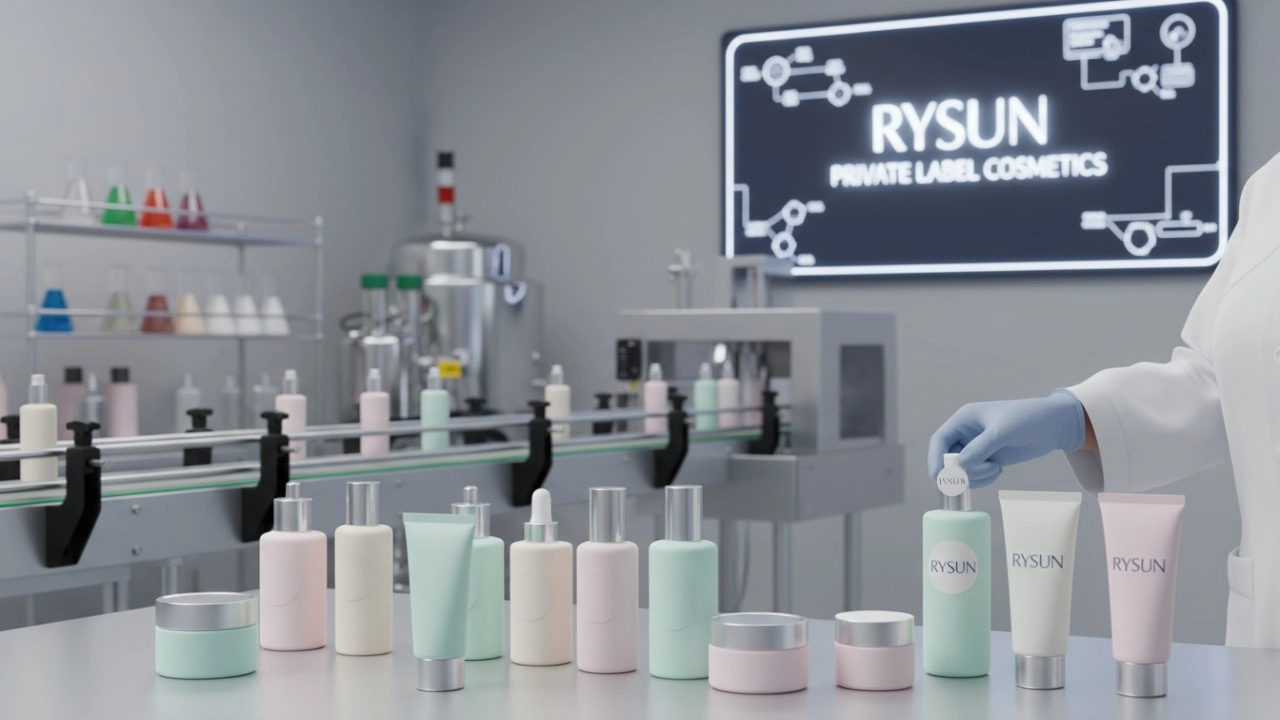
Scaling a successfully reverse-engineered prototype into commercial mass production requires an industry-leading partner equipped with robust manufacturing capabilities. Working with an experienced OEM cosmetics manufacturing facility guarantees that your new formula is both stable, cost-effective, and highly scalable.
Finding the exact chemical breakdown in a laboratory is merely half the battle. To bring a newly optimized product to market successfully, you need the right global manufacturing infrastructure. Guangzhou Rysun Biotechnology Co., Ltd. (RYSUN) firmly stands at the forefront of this exact process. Established in 2014 in the Guangzhou High-Tech Development Zone by Ivy Wong—who was deeply inspired by discussions with a Swiss anti-aging expert regarding inconsistent skincare quality in the market—RYSUN quickly evolved into a premier research-driven cosmetic powerhouse.
- Unmatched R&D Expertise: In 2015, RYSUN proudly founded its dedicated Research Institute. Today, it houses a formidable multidisciplinary team of doctors, professors, and R&D experts specializing in biology, dermatology, chemistry, microbiology, pharmacology, and packaging technology.
- Proven Global Track Record: Driven by a bold vision to become the world's leading cosmetics manufacturer, RYSUN leverages over 10 years of intensive experience. Supported by 20 leading scientific researchers, the company boasts 253 intellectual properties and 105 proprietary product patterns, successfully partnering with over 700 distinct brands and exporting to more than 50 countries globally.
- Rigorous Quality Control: Whether your brand is developing a specialized makeup remover, a potent face serum, a flawless tanning product, or a luxurious body wash, RYSUN strictly implements up to 50 individual inspection procedures per product to ensure absolute consistency and safety.
For independent brands looking to deeply understand the critical production journey from a delicate lab prototype to highly efficient final packaging, exploring a comprehensive custom cosmetic formulation guide can provide invaluable, actionable insights into precisely aligning analytical lab results with scalable, profitable commercial manufacturing.
Expert Tips and Common Mistakes in Reverse Engineering
The most common mistakes in reverse engineering occur when formulators ignore original processing methods, misunderstand raw material variances, or skip mandatory stability testing. Overlooking these critical formulation steps can quickly turn a chemically perfect lab match into a commercial failure.
Achieving a highly successful product launch requires meticulous attention to the subtle variables that exist far beyond the basic, raw ingredient list.
- Ignoring Processing Methods: A perfectly accurate chemical match can still fail spectacularly if the formulating chemist does not intuitively know the precise heating temperature, homogenization mixing speed, or exact cooling rate actively utilized by the original benchmark manufacturer.
- Raw Material Variances: Assuming all botanical extracts are chemically identical is a fatal formulation flaw. Natural plant extracts and patented active complexes vary wildly based on the original supplier, geographic origin, and harvest time, directly affecting the final emulsion's color, viscosity, and natural scent.
- Skipping Stability Testing: Dangerously rushing a freshly replicated prototype to market without proper, extended thermal and microbial challenge testing inevitably leads to catastrophic product separation, pH drift, or total spoilage on retail shelves.
Conclusion
Reverse engineering cosmetics is a highly complex, scientific blend of advanced analytical chemistry, precise ethical boundary navigation, and forward-thinking innovative reformulation. By thoroughly understanding the deep science behind bestselling legacy formulas, modern skincare brands can confidently innovate faster, radically improve product safety profiles, and successfully deliver high-quality, cost-effective alternatives to discerning consumers. To successfully reverse engineer, improve, and commercially scale your next blockbuster cosmetic product, it is absolutely imperative to partner with a seasoned manufacturer that deeply prioritizes advanced research, rigorous quality control, and scalable production solutions. Contact us today to optimize your cosmetic reverse engineering strategy.
FAQs About Replicating Bestsellers: The Ethics and Process of Reverse Engineering Cosmetics in 2026
How much does it cost to reverse engineer a cosmetic product?
The cost can range from $2,000 to over $10,000 depending on the complexity of the formula, the number of active ingredients, and whether extensive laboratory instrumentation (like GC-MS) is required.
Can you copy a patented skincare formula?
If a specific formulation, active complex, or delivery system is patented, reproducing it precisely and selling it is illegal. However, formulators can legally use the patented product as a benchmark to create a non-infringing alternative.
What is the 1% rule in cosmetic labeling?
According to cosmetic labeling regulations, ingredients present at concentrations greater than 1% must be listed in descending order of predominance. Ingredients at 1% or below can be listed in any order at the end of the INCI list.
How long does the cosmetic deformulation process take?
A standard chemical deformulation typically takes 4 to 8 weeks. However, creating a viable, stable prototype and completing the necessary challenge testing can extend the timeline to 3 to 6 months.
Are beauty 'dupes' legal?
Yes, beauty dupes are legal as long as they do not infringe on trademarks, copyrighted marketing materials, or patented chemical delivery systems. The formula itself is generally considered a trade secret.
Can a laboratory identify exact fragrance compounds?
Yes, advanced techniques like GC-MS can identify individual volatile aromatic compounds within a fragrance. However, perfectly matching a complex proprietary perfume blend is highly difficult and often requires a skilled perfumer.
What is the difference between deformulation and reformulation?
Deformulation is the analytical process of breaking down and identifying the ingredients of an existing product. Reformulation is the process of taking that data and altering the recipe to improve stability, lower costs, or change the sensory profile.
How do I choose the right OEM manufacturer for my replicated formula?
Look for a manufacturer with a strong in-house R&D team, strict quality control, and a proven track record. For example, Guangzhou Rysun Biotechnology utilizes 50 inspection procedures and holds 253 intellectual properties, ensuring high-quality, scalable replication.
Related articles

Get more information
If you have any comments or good suggestions, please leave us a message; later our professional staff will contact you as soon as possible.
Rysun Biotechnology--Unremittingly strive for human health and beauty
Contact RYSUN
Email: k.lee@rysunoem.com
WhatsApp: +86 156 0306 9138
Address: No. 62 Nanxiang First Road, Science Town of Guangzhou Developed Zone, Huangpu, Guangzhou, China.
© 2025 RYSUN. All Rights Reserved. Privacy Policy | Terms and Conditions | Sitemap
Facebook
Instagram