


Labelling, Claims and Compliance for Vanilla Body Oil Retailers
- Labelling, Claims and Compliance for Vanilla Body Oil Retailers
- Why compliance matters for vanilla body oil retail
- Product snapshot: Private Label Vanilla Body Oil
- 1. Regulatory context: cosmetic vs medicinal claims
- Primary references
- 2. Ingredient listing and INCI compliance
- 3. Making scientifically supportable claims for vanilla body oil
- Claim substantiation checklist
- 4. Mandatory label elements: what must appear on-pack
- 5. Allergen declarations, fragrance safety and IFRA
- 6. Safety testing and Good Manufacturing Practice (GMP)
- 7. Packaging, storage and claims about longevity of scent
- Carrier oil oxidative stability comparison
- 8. Examples of compliant claims and on-pack phrasing
- 9. Label layout example (what to display on front vs back)
- 10. Private label logistics: MOQ, customization and international sales
- 11. Quality documentation to request from your manufacturer
- 12. Practical checklist before you go to market
- 13. Brand advantage: why choose our Private Label Vanilla Body Oil
- FAQ – Frequently Asked Questions
- Q1: Can I claim anti-inflammatory on-pack for vanilla body oil?
- Q2: Do I need to register my private label product in the EU?
- Q3: What allergens must be declared?
- Q4: How long does stability testing take?
- Q5: Can I reduce the MOQ for a test run?
- Contact us / View product
- References and authoritative resources
Labelling, Claims and Compliance for Vanilla Body Oil Retailers
Why compliance matters for vanilla body oil retail
Retailers selling vanilla body oil must balance brand storytelling and sensory appeal with strict regulatory requirements. Non-compliant labels or unsupported claims can lead to recalls, fines, and reputational damage. This guide focuses on practical steps to ensure your Private Label Vanilla Body Oil meets local and international regulatory expectations while preserving its luxury positioning. With compliant labels and claims established, brands can accurately plan pricing using costing and margin strategies for private label vanilla body oil.
Product snapshot: Private Label Vanilla Body Oil
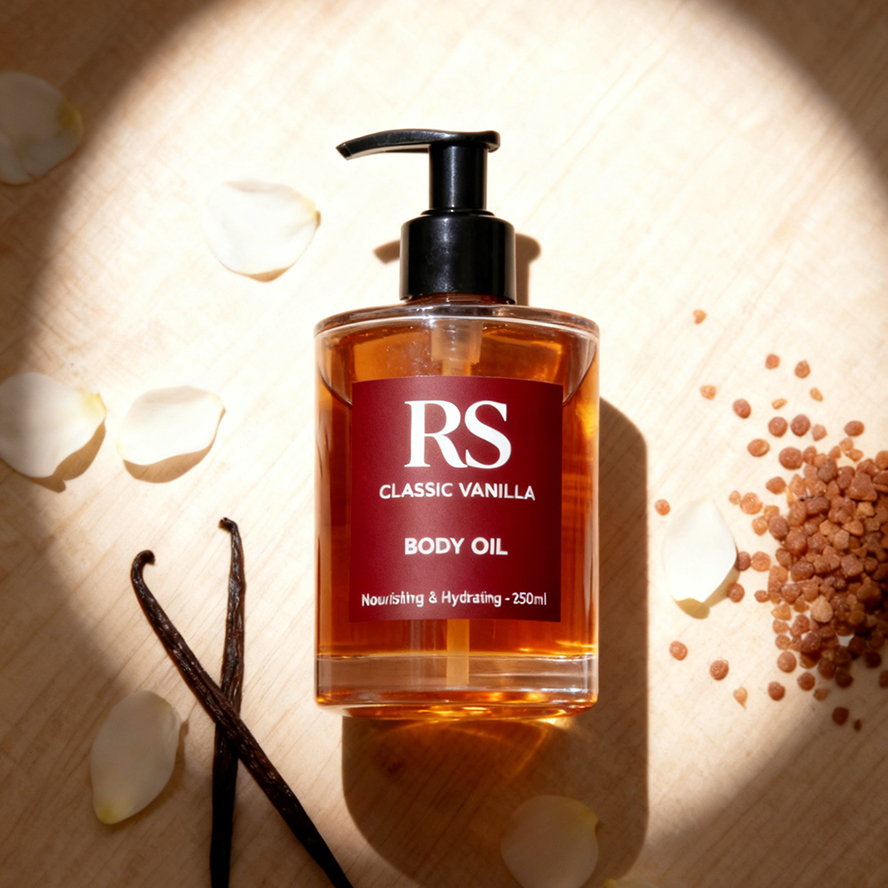
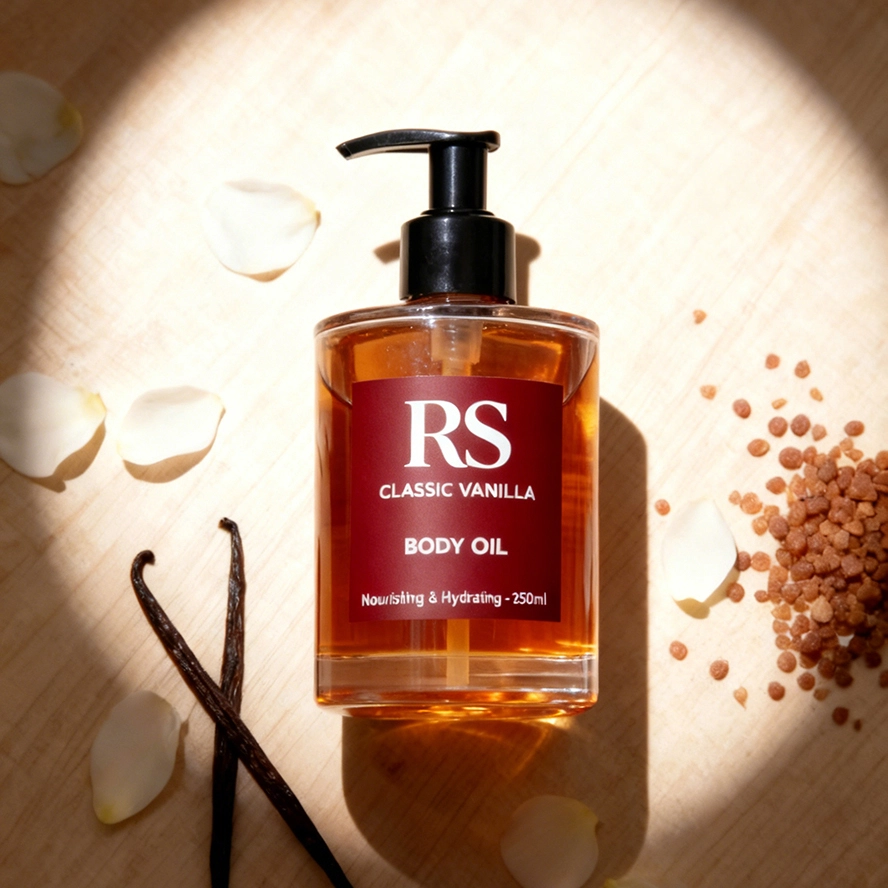
A luxury body treatment that uses Vanilla Oil and high-stability carrier oils. This product treats Vanilla as a bioactive ingredient, not just a perfume, giving a warm complexity of vanilla while delivering structural skin repair.
In the formula, we use vanilla oil as it is a natural antioxidant and anti-inflammatory. And the main carrier oil we use Meadowfoam Seed Oil, is unique because of its incredible oxidative stability. It acts as a natural fixative, locking the volatile vanilla compounds onto the skin so the scent lasts for hours.
This is a luxury body oil that gives you not only Sensory satisfaction but also like a spa treatment.
MOQ for this private label Vanilla Body Oil is 1000 units, custom formulas are available.
1. Regulatory context: cosmetic vs medicinal claims
First, determine whether your vanilla body oil is regulated as a cosmetic or a medicinal/therapeutic product in the target market. Cosmetics are intended to cleanse, beautify, promote attractiveness, or alter appearance. Medicinal products treat or prevent disease or change physiological functions.
Key practical rule: avoid therapeutic language such as treats eczema, heals dermatitis, or clinically proven to cure unless you have the required clinical data and regulatory approvals. Phrases emphasizing sensory benefit or general skin-supportive properties are typically acceptable for cosmetics when supported by ingredient-level evidence (see claim substantiation below).
Primary references
- United States: FDA guidance on cosmetics and labelling.
- European Union: Cosmetics Regulation (EC) No 1223/2009.
- International: IFRA and local authorities for fragrance restrictions.
2. Ingredient listing and INCI compliance
Always list ingredients using INCI (International Nomenclature of Cosmetic Ingredients) names, in descending order by weight for ingredients above 1%, and grouped appropriately for fragrances. For vanilla body oil, typical INCI entries might include: Caprylic/Capric Triglyceride, Limnanthes Alba (Meadowfoam) Seed Oil, Vanilla Planifolia Fruit/Seed/Bean Extract or Vanilla Planifolia (Vanilla) Fruit Extract, Tocopherol, parfum/fragrance. If you treat vanilla as a bioactive, ensure the INCI matches the supplier specification.
Include any allergen markers required by EU rules (e.g., listed fragrance allergens) and local mandates. Even natural oils can cause allergies; transparency reduces consumer risk and regulatory exposure.
3. Making scientifically supportable claims for vanilla body oil
Claims must be truthful, substantiated, and not misleading. For vanilla body oil, reasonable cosmetic claims include:
- Moisturizes and nourishes skin
- Contains natural antioxidant-rich vanilla oil
- Provides a long-lasting vanilla fragrance
- Suitable for normal to dry skin (if supported by tests)
Avoid unproven statements about treating inflammatory skin conditions or structural repairs unless you have robust clinical studies. When claiming antioxidant or anti-inflammatory activity of vanilla oil, cite relevant in vitro or in vivo studies and ensure the claim matches the level of evidence (e.g., contains antioxidant compounds vs clinically reduces inflammation).
Claim substantiation checklist
- Supplier Certificates of Analysis (COA) for key actives (vanilla oil, meadowfoam oil)
- Stability testing showing ingredient integrity and scent retention
- Microbial test results and preservative efficacy tests (if water-containing)
- Patch/irritation testing for consumer safety
- Any lab reports supporting antioxidant or anti-inflammatory activity
4. Mandatory label elements: what must appear on-pack
Most markets require these elements on cosmetic product labels. Present them clearly and legibly.
- Product name (e.g., Private Label Vanilla Body Oil)
- Net quantity (weight or volume)
- Full ingredient list (INCI)
- Manufacturer / distributor name and address
- Country of origin (if required)
- Batch or lot code and best-before/period-after-opening symbol if relevant
- Directions for use and any necessary warnings (e.g., avoid contact with eyes; keep out of reach of children)
- Responsible person contact for the market (e.g., EU Responsible Person)
5. Allergen declarations, fragrance safety and IFRA
Fragrance components may be subject to IFRA restrictions and some markets require disclosure of 26+ specific fragrance allergens when concentrations exceed threshold levels. If your formula uses natural vanilla absolute or vanilla CO2 extract, check the supplier's IFRA certificate and technical data sheet to confirm compliance and permissible usage levels.
6. Safety testing and Good Manufacturing Practice (GMP)
Implement a robust quality system. For private label production, your contract manufacturer should provide:
- Batch manufacturing records
- Certificate of Analysis for each batch
- Microbial limit testing
- Stability data demonstrating shelf-life and scent retention
- GMP compliance documentation (ISO 22716 for cosmetics is widely recognized)
7. Packaging, storage and claims about longevity of scent
Packaging affects both consumer perception and technical performance. Because Meadowfoam Seed Oil is highly oxidatively stable, it helps preserve volatile vanilla compounds. However, scent longevity claims like fragrance lasts up to 8 hours should be supported by sensory or instrumental testing (headspace GC-MS, standardized wear tests).
Carrier oil oxidative stability comparison
| Carrier Oil | Relative Oxidative Stability | Typical Benefits |
|---|---|---|
| Meadowfoam Seed Oil (Limnanthes Alba) | High | Excellent shelf-life, natural fixative effect for fragrances |
| Jojoba Oil (Simmondsia Chinensis) | High (liquid wax esters) | Stable, skin-compatible, good emolliency |
| Sweet Almond Oil (Prunus Amygdalus Dulcis) | Moderate | Good emollient, more prone to oxidation than meadowfoam |
| Argan Oil (Argania Spinosa) | Moderate to High | Rich in fatty acids and tocopherols, good nourishment |
8. Examples of compliant claims and on-pack phrasing
Compliant, persuasive phrases you can use for Private Label Vanilla Body Oil:
- Contains antioxidant-rich vanilla oil (if supplier COA supports antioxidant content)
- Locks in moisture and leaves a long-lasting vanilla scent (support with testing)
- Formulated with meadowfoam seed oil for improved scent retention
- Suitable for normal and dry skin (only with supporting data)
Example phrases to avoid without clinical backing: repairs skin structure, heals eczema, clinically proven to cure inflammation.
9. Label layout example (what to display on front vs back)
Front-of-pack should be brand-forward and include product name, net weight, and a short benefit line. Back-of-pack should contain the ingredient list, directions, warnings, and manufacturer details. Keep typography and contrast accessible.
10. Private label logistics: MOQ, customization and international sales
For Private Label Vanilla Body Oil the stated MOQ is 1000 units. When planning international expansion, anticipate additional documentation such as Cosmetic Product Safety Report (CPSR) for the EU, product notifications (e.g., CPNP in EU), and local registration or notification systems elsewhere. If you plan to alter fragrance levels or base oils for specific markets, coordinate with your manufacturer for new stability and safety tests.
11. Quality documentation to request from your manufacturer
Before listing the product for sale, collect the following:
- Full formula (for Responsible Person use and safety assessment)
- COAs for key raw materials (vanilla oil, meadowfoam oil)
- Batch Certificates of Analysis
- Stability test reports (shelf-life, sensory retention)
- Microbiology test results
- GMP and ISO compliance certificates
- IFRA certificate for fragrance components, if applicable
12. Practical checklist before you go to market
- Confirm product classification (cosmetic vs medicinal)
- Finalize INCI ingredient list and label layout
- Gather COAs, stability, microbial, and safety testing
- Write supported claims and internal documentation for substantiation
- Register or notify product with local authorities where required
- Prepare customer-facing materials: product page copy, FAQ, and safety information
13. Brand advantage: why choose our Private Label Vanilla Body Oil
Our Private Label Vanilla Body Oil is positioned as a luxury treatment that combines sensory excellence with ingredient performance. Key differentiators:
- Vanilla treated as a bioactive ingredient — sourced and characterized to support antioxidant and anti-inflammatory claims
- Meadowfoam Seed Oil base for superior oxidative stability and natural fixation of vanilla volatiles, helping scent longevity
- Full documentation package available (COAs, stability studies, GMP certification) to support claims and regulatory submissions
- MOQ of 1000 units with customization options for fragrance intensity, packaging, and labeling
FAQ – Frequently Asked Questions
Q1: Can I claim anti-inflammatory on-pack for vanilla body oil?
Not without appropriate scientific evidence that meets the regulatory threshold in your market. For cosmetics, prefer conservative phrasing such as contains natural ingredients that exhibit antioxidant properties and maintain supporting lab data.
Q2: Do I need to register my private label product in the EU?
Yes. Cosmetics sold in the EU must have a Responsible Person and be notified through the Cosmetic Products Notification Portal (CPNP). You will also need a Cosmetic Product Safety Report (CPSR).
Q3: What allergens must be declared?
If fragrance allergens exceed threshold concentrations, EU law requires declaration of the 26 specified fragrance allergens on the label. Check local regulations for other jurisdictions.
Q4: How long does stability testing take?
Accelerated stability testing can provide early indicators in 3 months, but most manufacturers rely on 6–12 months of data to set conservative shelf-lives. For volatile retention (scent), sensory wear tests or GC-MS headspace testing may be necessary.
Q5: Can I reduce the MOQ for a test run?
Some manufacturers offer smaller pilot runs for higher unit costs. Our standard MOQ is 1000 units, but customization and smaller pilot options may be available—contact us to discuss.
Contact us / View product
Ready to launch or need a compliance review for your Private Label Vanilla Body Oil? Contact our team for a documentation package, samples, and a custom quote. Email: sales@example.com or visit the product page for specifications and ordering details.
References and authoritative resources
- EU Cosmetics Regulation (EC) No 1223/2009 - https://eur-lex.europa.eu/legal-content/EN/TXT/?uri=CELEX%3A32009R1223
- U.S. FDA - Cosmetics Overview and Labelling Guidance - https://www.fda.gov/cosmetics
- IFRA - International Fragrance Association - https://ifrafragrance.org
- ISO 22716 Cosmetics — Good Manufacturing Practices (GMP) - https://www.iso.org/standard/36437.
- Vanilla (general info) - Wikipedia - https://en.wikipedia.org/wiki/Vanilla
- Meadowfoam seed oil - Wikipedia - https://en.wikipedia.org/wiki/Meadowfoam
Top 10 Body Lotions for Men Buyers Should Consider
DIY Gentle Makeup Remover Recipes with Natural Oils
Best Body Lotions for Glowing Skin for Retailers & Brands
Sourcing Private-Label Face Cream for Dry Skin at Scale
FAQs
Do your products test on animals?
We proudly create 100% cruelty-free and vegan cosmetics, never tested on animals.
Hand & Foot Care
Can we add face-grade actives like Retinol, Vitamin C, or Niacinamide to hand cream?
Yes, that is not a problem.
Hair Mask
What are the hydrating and repairing agents used in hair masks?
Different regions have their preferences; we almost have all the trending ingredients in the market. Please have a look at the ingredient part.
Face Toner
What does toner do?
It acts as a primer for the rest of your skincare routine, removes final traces of impurities, and provides targeted benefits.
Face Mist
What is your Minimum Order Quantity (MOQ)?
Usually we ask for 1000 units.
Get more information
If you have any comments or good suggestions, please leave us a message; later our professional staff will contact you as soon as possible.
Rysun Biotechnology--Unremittingly strive for human health and beauty
Contact RYSUN
Email: k.lee@rysunoem.com
WhatsApp: +86 156 0306 9138
Address: No. 62 Nanxiang First Road, Science Town of Guangzhou Developed Zone, Huangpu, Guangzhou, China.
© 2025 RYSUN. All Rights Reserved. Privacy Policy | Terms and Conditions | Sitemap
Facebook
Instagram