



Costing and Margin Strategies for Private Label Vanilla Body Oil
- Costing and Margin Strategies for Private Label Vanilla Body Oil
- Why vanilla body oil commands a High Quality and how to position Private Label Vanilla Body Oil
- Key cost components: building an accurate COGS for vanilla body oil
- Example COGS breakdown (illustrative numbers per 100 mL unit at MOQ 1,000)
- Manufacturing scale, MOQ and its impact on margins
- Custom formulation costs and timelines
- Packaging strategy: align presentation with price and margin goals
- Regulatory, safety testing and claims — budget these early
- Claim guidance
- Logistics, warehousing and landed cost calculation
- Channel margins and retail pricing models
- Pricing scenarios (using the example COGS $8.50)
- Strategies to protect and improve margins
- Risk management for vanilla (price volatility)
- Brand advantage and product storytelling for Private Label Vanilla Body Oil
- Operational checklist before launch
- FAQ — Private Label Vanilla Body Oil costing & margins
- Q: What minimum retail price should I set for this product?
- Q: How can I reduce COGS without compromising scent or stability?
- Q: Is vanilla safe as an active ingredient in cosmetics?
- Q: What are typical lead times and initial costs for a custom formula?
- Q: How do I price for wholesale vs. retail?
- Contact & next steps
- Authoritative references
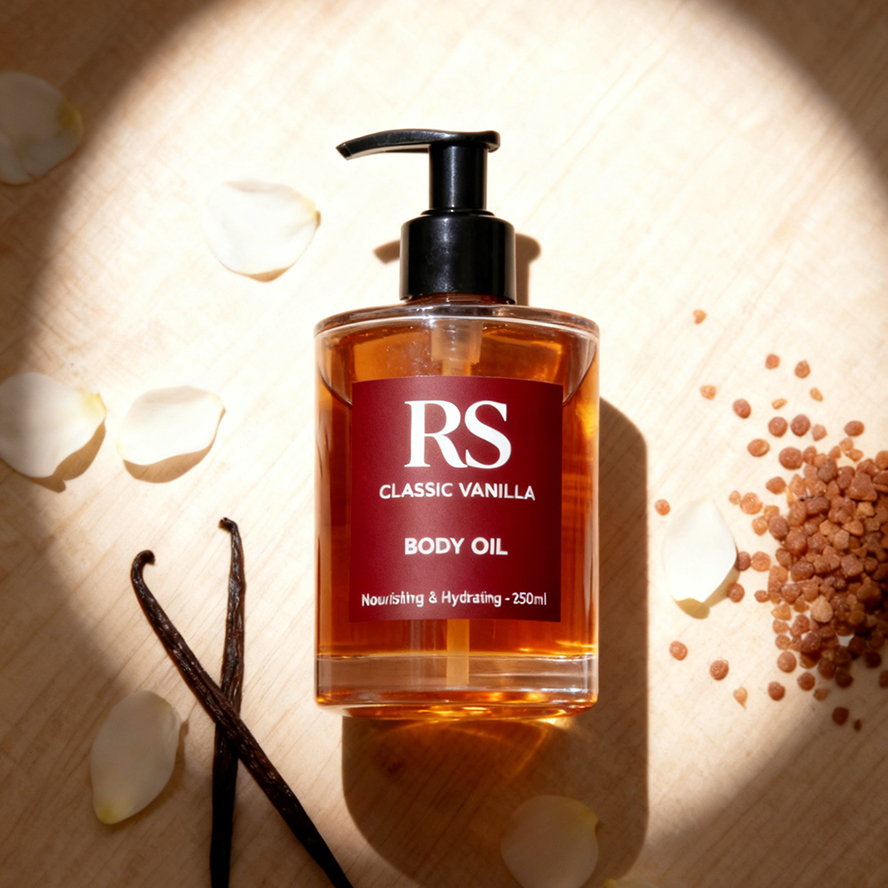
Costing and Margin Strategies for Private Label Vanilla Body Oil
Why vanilla body oil commands a High Quality and how to position Private Label Vanilla Body Oil
The market for High Quality body oils is growing as consumers look for multi-functional, sensorial skincare that delivers both results and experience. Private Label Vanilla Body Oil is positioned as a luxury body treatment that uses Vanilla Oil and high-stability carrier oils (notably Meadowfoam Seed Oil) and treats vanilla as a bioactive ingredient, not just a perfume. This positioning—functional skincare + sensory spa experience—permits higher retail prices but requires disciplined costing to protect margins. As margins and cost structures are finalized, many brands revisit how to choose private label vanilla body oil suppliers to ensure long-term scalability and profitability.
Key cost components: building an accurate COGS for vanilla body oil
To set margins you must first know your per-unit Cost of Goods Sold (COGS). For Private Label Vanilla Body Oil, typical COGS categories include:
- Raw materials (vanilla oil, meadowfoam seed oil, other carrier oils, antioxidants, preservatives where needed)
- Packaging (bottle, cap, dropper or pump, label, box/shipper)
- Manufacturing & filling (co-packer fees, fill line, QA)
- Regulatory & testing (stability, preservative efficacy, microbiology, IFRA/ALLERGEN checks)
- Freight, duties and insurance
- Sample development and R&D (formulation, stability rounds)
- Overhead allocation (QC, account management, tooling amortization)
Example COGS breakdown (illustrative numbers per 100 mL unit at MOQ 1,000)
Below is a simple, realistic model you can adapt to your exact inputs. Figures are illustrative—adjust with supplier quotes.
| Cost Item | Unit Cost (USD) | Notes |
|---|---|---|
| Vanilla oil (bioactive fraction) | 2.50 | High Quality vanilla extracts/oils are expensive; blended fractions may reduce cost |
| Meadowfoam seed oil + other carriers | 1.80 | Meadowfoam adds oxidative stability—permits longer shelf/scent life |
| Packaging (bottle + cap + label + box) | 2.20 | High Quality glass bottle and boxed presentation increase perceived value |
| Fill & co-packing | 0.90 | Line fees, QC sampling, secondary packing |
| Testing & regulatory amortized | 0.40 | Stability & safety testing spread across MOQ |
| Freight & duties (avg) | 0.30 | Depends on origin, Incoterms |
| Overhead & tooling amortization | 0.40 | Artwork, samples, minor tooling |
| Total COGS | 8.50 |
Note: At higher MOQs the per-unit testing and overhead allocation drops, improving COGS. Vanilla oil cost can vary dramatically with origin and grade; track that line item closely.
Manufacturing scale, MOQ and its impact on margins
MOQ for Private Label Vanilla Body Oil is 1,000 units (as specified). MOQ drives fixed-cost amortization (artwork, stability testing, mold/tooling if any). Key considerations:
- MOQ 1,000 is common for High Quality cosmetics and keeps entry cost achievable while giving manufacturers efficient runs.
- If you can increase to 3,000–5,000 units, expect 10–25% reduction in per-unit COGS due to lower amortized testing, better raw material pricing, and improved packaging pricing.
- Negotiate tiered pricing: set breakpoints (1k / 3k / 5k) with your co-packer and packaging vendor.
Custom formulation costs and timelines
Custom formulas are available. Expect additional costs and lead time for each custom iteration:
- Formulation and prototyping: typically $1,000–$5,000 depending on complexity.
- Stability testing per formula: $1,500–$4,000 (accelerated + 3-month real time).
- IFRA and allergen review: $300–$1,000.
- Typical lead time: 6–12 weeks for formula finalization + 4–8 weeks to manufacture depending on capacity.
Packaging strategy: align presentation with price and margin goals
Packaging heavily influences perceived value for a luxury vanilla body oil. Decisions here affect both COGS and retail price:
- Glass amber bottles with metallic caps and boxed presentation justify High Quality pricing but cost more.
- Consider matte labels, embossing or heavier boxes only if projected retail price > $40–45; otherwise simplify to reduce COGS.
- Use a packaging spec worksheet to compare materials by cost, weight, and shelf-impact. Test par levels and shipping protection to avoid damage costs.
Regulatory, safety testing and claims — budget these early
When marketing a product that treats vanilla as a bioactive ingredient you must be careful about claims. Regulatory costs you must include:
- Ingredient review for safety and IFRA compliance (fragrance use limits)
- Stability testing and preservative efficacy if water is present (this product is anhydrous so P&E may be lower)
- Label compliance (ingredient listing, batch codes, warnings)
- Country-specific registrations (e.g., EU Cosmetic Product Notification Portal)
Claim guidance
Phrase functional claims carefully. Instead of stating “repairs skin structure,” use supported language like “supports skin barrier hydration” and cite studies where appropriate. Avoid medical claims that trigger drug regulation.
Logistics, warehousing and landed cost calculation
Logistics adds to land cost per unit. Calculate landed cost as:
Landed Cost = COGS (factory) + Freight + Duties + Import Handling + Local Transport + Insurance
Tips:
- Use Incoterms to clarify responsibility for freight and insurance.
- Consolidate shipping to reduce cost per unit (LCL vs. FCL choices).
- Account for returns, breakage, and inventory shrinkage (2–5% typical for High Quality glass bottles unless extra protection used).
Channel margins and retail pricing models
How you distribute affects required markup. Common channel margin structures:
- Direct-to-consumer (DTC): aim for 60–70% gross margin at retail price to cover marketing, fulfillment, and returns.
- Wholesale to boutiques/retailers: retailers often expect 40–50% margin off RRP (keystone or slightly less for High Quality), so your wholesale price should be ~50–60% of RRP.
- Distributors: expect an additional 10–20% cut; structure pricing accordingly.
Pricing scenarios (using the example COGS $8.50)
| Strategy | RRP (USD) | Wholesale Price | Gross Margin (to brand at wholesale) | Notes |
|---|---|---|---|---|
| High Quality spa retail | 55.00 | 27.50 (50% of RRP) | (27.50 - 8.50)/27.50 = 69.1% | High margin; supports heavy marketing and sampling costs |
| High-end boutique | 45.00 | 22.50 | 62.2% | Balanced positioning |
| DTC focused | 40.00 | — | (40.00 - 8.50)/40.00 = 78.8% gross margin at retail | Higher margin if you keep control of customer acquisition costs |
These examples show a comfortable margin even at realistic COGS if you keep RRP above $40. If you choose lower price points, revisit packaging or ingredient specs to protect margin.
Strategies to protect and improve margins
Practical levers you can pull:
- Negotiate raw material contracts and lock price or volume discounts for vanilla fractions where possible.
- Increase MOQ for second production run to reduce per-unit testing/overhead.
- Adopt a modular packaging strategy: reserve deluxe boxes for flagship SKUs and use simpler cartons for refill SKUs to preserve High Quality perception.
- Offer refill pouches or concentrate formats to reduce per-use material cost and support sustainability messaging.
- Use pre-sell or subscription models (DTC) to finance production and improve cash flow.
- Bundle: pair body oil with a complementary item (e.g., body scrub) to raise AOV and amortize fixed marketing spend.
Risk management for vanilla (price volatility)
Vanilla bean and extract prices can be volatile due to supply concentration in key regions and weather events. Tactics:
- Use blended vanilla fractions (natural isolates + extract blends) to stabilize cost while preserving scent profile.
- Hedge price by fixing supplier contracts for 6–12 months or maintaining a small safety inventory.
- Communicate traceability and sustainable sourcing to justify High Quality pricing when raw-material costs rise.
Brand advantage and product storytelling for Private Label Vanilla Body Oil
When you sell a luxury body oil, the perception of efficacy and High Quality experience is as important as the formula. Points of differentiation to highlight in marketing and on-pack:
- Vanilla as bioactive: explain that vanilla oil contributes antioxidant and anti-inflammatory benefits—position as an ingredient with functional properties rather than only fragrance.
- Meadowfoam Seed Oil: emphasize oxidative stability and the natural fixative effect that locks vanilla scent onto the skin for hours—this supports sensory claims.
- Spa-like experience: frame usage instructions and ritual recommendations to lift perceived value (e.g., apply after warm bath for best absorption).
- Sustainability & traceability: highlight responsibly sourced vanilla and supplier audits if available; consumers of High Quality products expect transparency.
Operational checklist before launch
Before your first production run (MOQ 1,000), verify:
- Finalized and stability-tested formula
- Supplier contracts and lead times for vanilla fractions and packaging components
- Packaging proofs and drop tests for transit
- Label compliance for target markets
- Pricing/discount tiers for wholesale, distributor and retail channels
- Marketing plan with CAC assumptions and sample allowance budget
FAQ — Private Label Vanilla Body Oil costing & margins
Q: What minimum retail price should I set for this product?
A: For a luxury Vanilla Body Oil with stable meadowfoam carrier oil and High Quality packaging, aim for RRP between $40–$60. At a $40 RRP and illustrative COGS $8.50 you maintain strong gross margin for DTC. Use channel margin calculus for wholesale and retailers.
Q: How can I reduce COGS without compromising scent or stability?
A: Negotiate vanilla oil blends (partial use of stabilized vanilla fractions), buy packaging at tiered volumes, and optimize fill runs to reduce co-packer fees. Consider slightly lighter-weight glass or high-quality PET alternatives if market tolerance allows.
Q: Is vanilla safe as an active ingredient in cosmetics?
A: Vanilla (and its constituents such as vanillin) has been reported to have antioxidant properties in scientific literature. However, avoid medicinal claims; phrase benefits as antioxidant support or soothing properties and ensure safety/IFRA compliance for topical use.
Q: What are typical lead times and initial costs for a custom formula?
A: Expect 10–20 weeks from formula finalization to finished goods for the first run, and upfront custom formulation/testing can cost $2,000–$8,000 depending on the number of iterations and tests required.
Q: How do I price for wholesale vs. retail?
A: Determine your target retail price (RRP), then set wholesale at ~50–60% of RRP to enable a retailer margin of 40–50%. Ensure your wholesale price still yields a healthy margin after COGS.
Contact & next steps
If you are ready to quote or discuss formulations, MOQ, or custom packaging for Private Label Vanilla Body Oil (MOQ 1,000 units), contact our sales team to request a detailed costing sheet and timeline. Request a sample pack or product spec sheet to evaluate scent, texture and packaging options.
CTA: Contact us today to request a quote or to order samples of Private Label Vanilla Body Oil — bring a spa-level vanilla treatment to RYSUN.
Authoritative references
Sources used for regulatory and ingredient context:
- Vanilla — Wikipedia: https://en.wikipedia.org/wiki/Vanilla
- Meadowfoam — Wikipedia: https://en.wikipedia.org/wiki/Meadowfoam
- Vanillin (PubChem): https://pubchem.ncbi.nlm.nih.gov/compound/Vanillin
- U.S. FDA — Cosmetics Overview: https://www.fda.gov/cosmetics
- European Commission — Cosmetics: https://ec.europa.eu/growth/sectors/cosmetics_en
- IFRA — International Fragrance Association (use limits & guidance): https://ifrafragrance.org
These links provide background on ingredient characteristics, regulatory frameworks and fragrance guidance that inform safe formulation and compliant marketing.
DIY Gentle Makeup Remover Recipes with Natural Oils

Certifications to Request for Hair Oil for Dry Hair
Micellar vs Oil: Which Gentle Makeup Remover Wins?
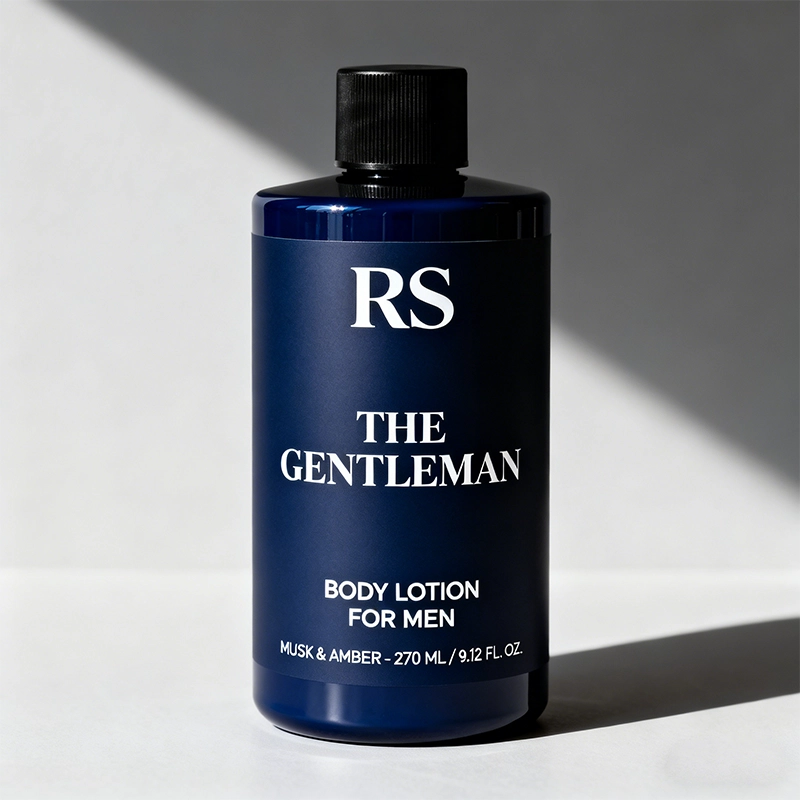
Fragrance-Free Body Lotions Men Will Actually Use
Eye Care
How do you formulate products for the delicate eye area?
We need a milder ingredient & formula. After sampling, our staff will try it on our eyes to see its sensitivity and perform CAM testing. You can trust our formula and professionalism.
Body Mist
Can you manufacture a clear, water-based mist?
Definitely we can make that.
Face Wash
About the formulas, can you assist with providing samples?
Yes, we provide unique formulas to each customer according to their target audiences, climate and skin problems.
Hair Oil
Can you create different formulations for specific hair types and concerns?
Yes, we provide 100% customized formulas.
FAQs
What kind of certifications do you have?
Firstly we are a GMPC manufacturer that meets the standard worldwide. And we have ISO 9001, ISO 22716 certifications. Besides, our factory has passed US FDA audit, able to apply CPNP and CPSR.
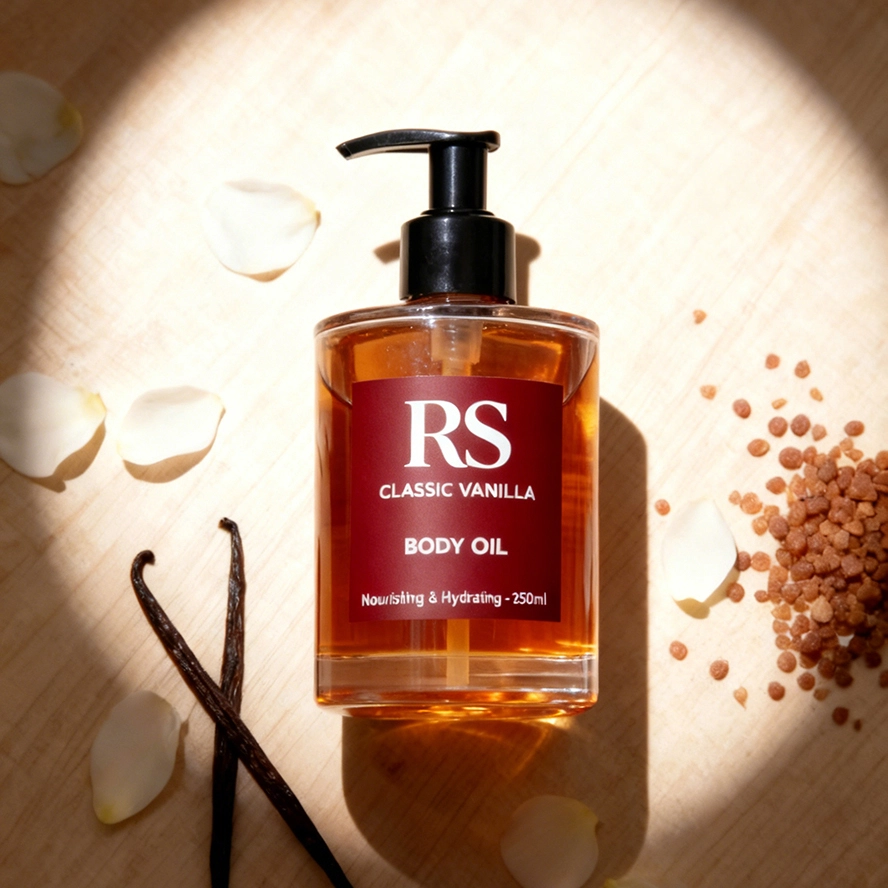
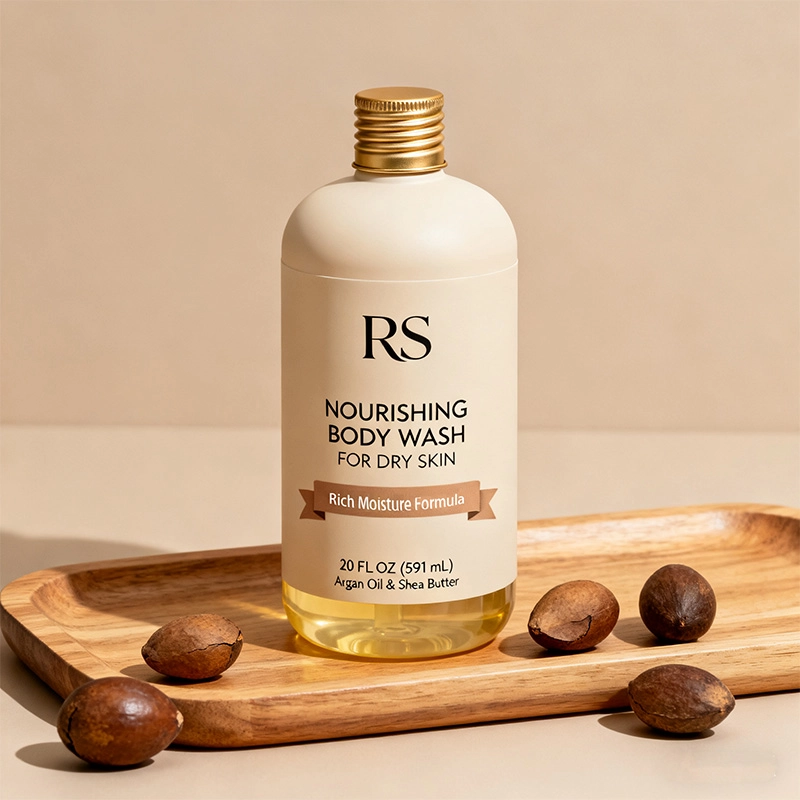
Get more information
If you have any comments or good suggestions, please leave us a message; later our professional staff will contact you as soon as possible.
Rysun Biotechnology--Unremittingly strive for human health and beauty
Contact RYSUN
Email: k.lee@rysunoem.com
WhatsApp: +86 156 0306 9138
Address: No. 62 Nanxiang First Road, Science Town of Guangzhou Developed Zone, Huangpu, Guangzhou, China.
© 2025 RYSUN. All Rights Reserved. Privacy Policy | Terms and Conditions | Sitemap
Facebook
Instagram