


Will Tinted Sunscreen Stain Clothes? The Science of Stains & Solutions | Rysun
Will tinted sunscreen stain clothes? Yes, but formulation matters. Rysun’s R&D experts explain why stains happen, how to remove them, and how our transfer-resistant technology minimizes the mess.
Will Tinted Sunscreen Stain Clothes? Why It Happens and How We Minimize It
Introduction
It is a scenario every skincare enthusiast fears: you apply your favorite tinted SPF, pull on a white t-shirt, and suddenly notice a rusty-orange smudge on the collar.
When our founder, Ivy Wong, established Guangzhou Rysun Biotechnology in 2014, she aimed to tackle the "inconsistent quality" in the market. Through her collaboration with Swiss anti-aging experts, she learned that while high-performance ingredients are crucial, the wearability of a product is just as important.
So, will tinted sunscreen stain clothes? The short answer is yes—but the severity depends entirely on the quality of the formulation. Backed by our Research Institute and 253 intellectual properties, here is the science behind the stain and how Rysun develops Practical Solutions to prevent it.
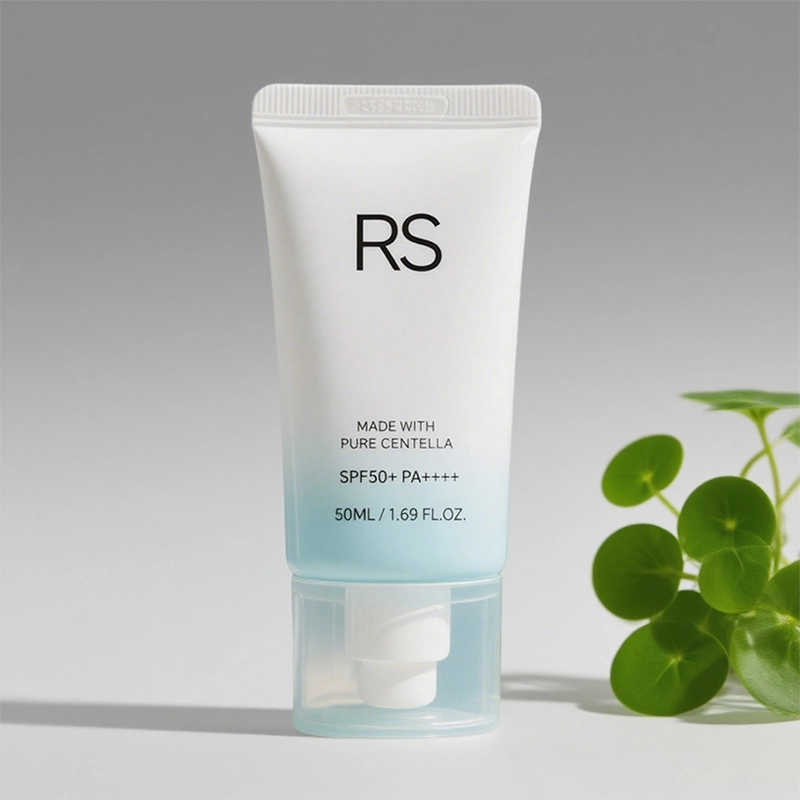
Here is our private label sunscreen collection, pls click here for more details.
1. The Culprit: Iron Oxides
To understand the stain, you must understand the ingredient. Tinted sunscreens rely on Iron Oxides to provide color and protect against Blue Light (HEV).
- The Science: Iron oxide is essentially a mineral rust. When mixed with oils and emollients, it creates a pigment that is fantastic for your skin but dangerous for your fabrics.
- The Reality: Because it is a pigment, if it transfers to fabric, it acts like a dye. This is different from chemical sunscreens (like Avobenzone), which react with water to create yellow stains later. Tinted stains are visible immediately.
2. Why "Cheap" Formulations Stain More
Not all tinted sunscreens are created equal.
- The Issue: Low-quality formulations often lack proper "film-forming" agents. This means the pigment sits wet on the skin's surface, sliding off onto collars, towels, and car seats.
- The Rysun Difference: At our Research Institute, our team of 20+ experts focuses on Transfer Resistance. We utilize advanced polymers that help the sunscreen "set" or dry down quickly. By locking the iron oxides into a flexible mesh on the skin, we significantly reduce the risk of transfer compared to generic market competitors.
3. How to Remove Tinted Sunscreen Stains (Pro Tips)
If an accident happens, don't panic. Based on our understanding of chemical formulations, here is the best way to save your clothes:
- Do NOT use Bleach: This is critical. Bleach oxidizes the iron in the tint, turning the stain into permanent rust.
- Use an Enzyme Cleaner: Treat the spot with a detergent containing enzymes or a dedicated stain remover.
- Cut the Grease: Since sunscreen is oil-based, dish soap is often the most effective pre-treatment to break down the water-resistant oils holding the pigment to the fabric.
4. Rysun’s "50-Step" Promise
How do we ensure our partners receive the most wearable products?
- Strict Quality Control: Every batch at Rysun undergoes 50 inspection procedures.
- Rub-Off Testing: We specifically test for "rub-off" resistance. Our goal is to balance hydration with adhesion. A product that is too oily will stain; a product that is too dry will crack. Our 105 product patterns have found the perfect "Swiss-inspired" balance that stays on your face, not your clothes.
For Brands: The Market Demand for "Transfer-Proof" SPF
If you are a brand owner, "staining" is one of the top reasons for customer returns. Partnering with Rysun allows you to access our Proprietary Film-Forming Technology. We help you launch tinted sunscreens that claim "Transfer Resistance"—a massive selling point in the 50+ countries we currently serve.
FAQs
Q1: Can Rysun manufacture a 100% stain-proof tinted sunscreen?
A: No cosmetic product containing pigment is 100% stain-proof against rigorous friction (like scrubbing a towel on your face). However, our R&D team formulates "Transfer-Resistant" products that minimize accidental transfer during normal wear.
Q2: Does "Water Resistant" mean it won't stain clothes?
A: Generally, yes, it helps. Water-resistant formulas contain polymers that bind the pigment to the skin. Rysun’s water-resistant formulations are much safer for your wardrobe than non-water-resistant ones.
Q3: Why did my white sunscreen turn my collar yellow?
A: That is likely due to a chemical filter called Avobenzone. When it mixes with iron in hard water or sweat, it creates a yellow stain. Rysun offers "Clean Science" formulas that avoid unstabilized Avobenzone to prevent this issue.
Q4: How long should I wait before getting dressed?
A: We recommend the "15-Minute Rule." Allow the sunscreen to form its protective film. Once it feels dry to the touch (not tacky), it is safe to put on your clothes.
Related articles
Get more information
If you have any comments or good suggestions, please leave us a message; later our professional staff will contact you as soon as possible.
Rysun Biotechnology--Unremittingly strive for human health and beauty
Contact RYSUN
Email: k.lee@rysunoem.com
WhatsApp: +86 156 0306 9138
Address: No. 62 Nanxiang First Road, Science Town of Guangzhou Developed Zone, Huangpu, Guangzhou, China.
© 2025 RYSUN. All Rights Reserved. Privacy Policy | Terms and Conditions | Sitemap
Facebook
Instagram