



What Do Koreans Use Instead of Retinol? The Top 4 K-Beauty Alternatives | Rysun Biotech
Wondering "What do Koreans use instead of retinol?" The answer lies in gentle efficacy: Bakuchiol, Ginseng, and Peptides. Discover how Rysun Biotech manufactures these trending barrier-safe ingredients.
What Do Koreans Use Instead of Retinol? A Guide to Gentle, Barrier-First Anti-Aging
Introduction
Western skincare often prioritizes "aggressive" results—think high-percentage acids and potent Retinoids. However, the K-Beauty (Korean Beauty) philosophy is different. It prioritizes the skin barrier above all else. This leads many consumers and brand owners to ask: "What do Koreans use instead of retinol?"
At Guangzhou Rysun Biotechnology, we have our finger on the pulse of global trends. Exporting to over 50 countries and partnering with 700+ brands, we have seen the massive shift toward "gentle aging." Founded in 2014 by Ivy Wong to solve the industry's "inconsistent quality," and inspired by insights from a Swiss anti-aging expert, we understand that you don't always need irritation to get results.
Backed by our Research Institute and 20 leading scientists, here is the expert guide to the ingredients Koreans use to achieve "glass skin" without the Retinol burn.
Here is our private label face serum collection, pls click here for more details.
The K-Beauty Philosophy: Why Avoid Retinol?
It’s not that Koreans never use Retinol, but traditional K-Beauty focuses on hydration and soothing. Retinol can cause thinning of the barrier and redness, which contradicts the goal of "healthy, plump skin."
Instead, they use ingredients that mimic Retinol’s collagen-boosting effects but offer soothing properties. Here are the top 4 alternatives Rysun manufactures for this market.
1. Bakuchiol (The Plant-Based Twin)
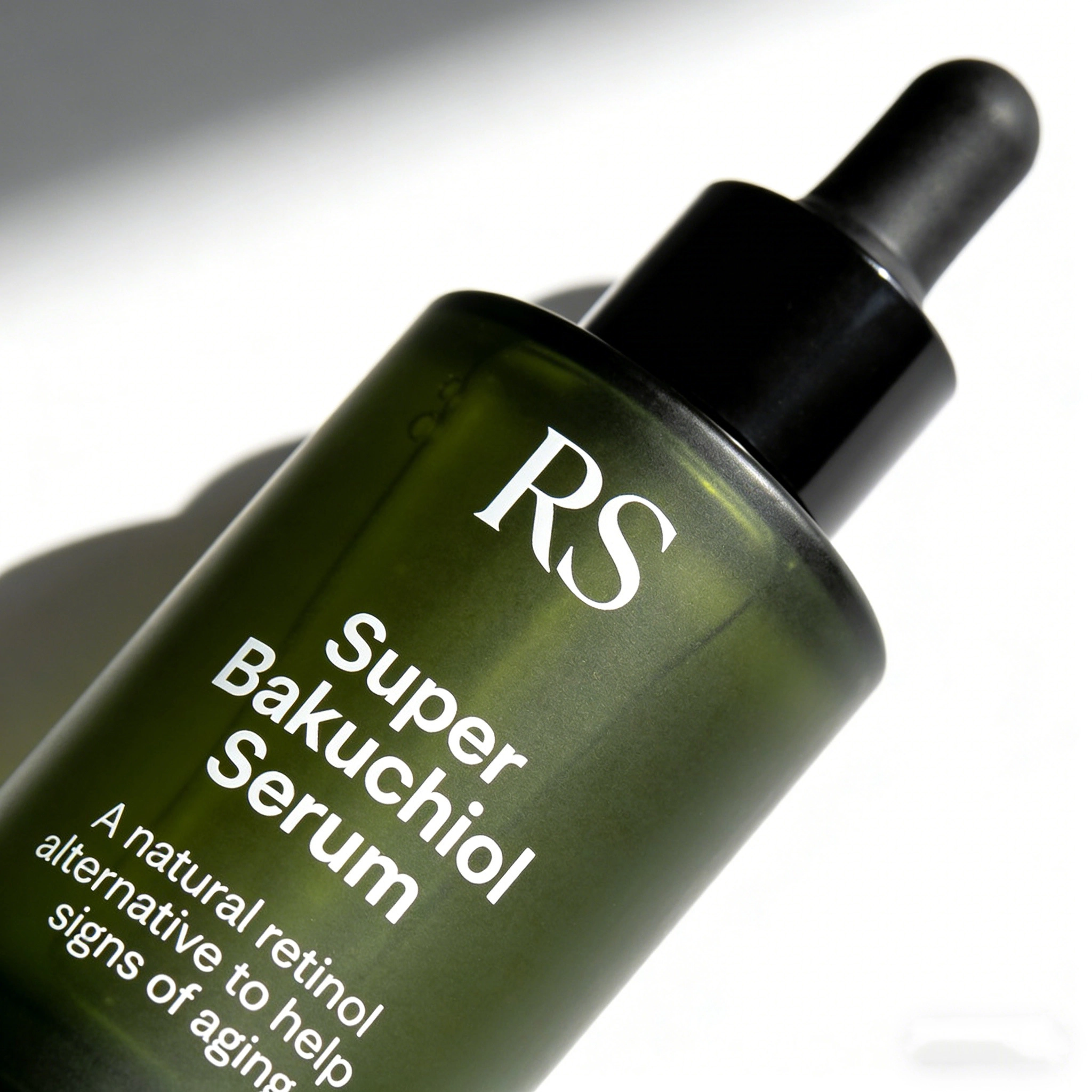
The most popular answer to "What do Koreans use instead of retinol?" is Bakuchiol.
- What it is: An extract from the Psoralea Corylifolia plant.
- The Science: Clinical studies show Bakuchiol acts on the same receptors as Retinol to boost collagen and reduce wrinkles, but without the peeling or sun sensitivity.
- The Rysun Standard: Leveraging our 253 intellectual properties, we formulate high-purity Bakuchiol serums that are stable and effective, offering brands a "Clean Beauty" alternative to Vitamin A.
2. Ginseng (The Traditional Powerhouse)
Before Retinol existed, there was Ginseng.
- What it is: A root used in Hanbang (traditional medicine).
- The Science: Ginseng is rich in saponins. These compounds increase oxygen circulation in the skin and stimulate collagen production, firming the skin much like Retinol does, but with added antioxidant protection.
- The Rysun Standard: We use advanced extraction technologies to ensure our Ginseng serums are potent and rich in active saponins, providing a "Practical Solution" for natural anti-aging.
3. Peptides (The Gentle Architects)
If Retinol is the construction boss shouting orders, Peptides are the quiet workers.
- What it is: Short chains of amino acids (like Copper Peptides or EGF).
- The Science: They signal the skin to repair itself and produce more collagen. They are non-irritating and hydrating.
- The Rysun Standard: Inspired by our Swiss anti-aging origins, Rysun specializes in Signal Peptides. We create sophisticated peptide blends that offer structural firming without disrupting the barrier.
4. Adenosine (The K-Beauty Staple)
You will find this ingredient in almost every Korean anti-aging product.
- What it is: A yeast-derived ingredient that functions as a soothing cell-communicator.
- The Science: Adenosine energizes the surface of the skin, smoothing out texture and fine lines. Unlike Retinol, it is anti-inflammatory, making it perfect for sensitive skin.
The Rysun Manufacturing Advantage
Why should a brand choose Rysun to manufacture these alternatives?
Because "natural" ingredients are often harder to stabilize than synthetic ones.
- Purity Control: Plant extracts like Bakuchiol and Ginseng can vary in quality. Rysun implements up to 50 inspection procedures per product to ensure standardization.
- Formulation Synergy: We use our 105 product patterns to create "Power Hybrids." For example, we manufacture serums that combine Bakuchiol + Peptides, offering a double-action anti-aging effect that rivals Retinol but remains gentle enough for daily use.
Conclusion
So, what do Koreans use instead of retinol? They use Bakuchiol, Ginseng, Peptides, and Adenosine.
These ingredients prove that anti-aging doesn't have to hurt. At Rysun Biotechnology, we combine the precision of Swiss science with the gentle philosophy of Asian skincare. Partner with us to manufacture barrier-safe anti-aging products that appeal to the modern, educated consumer.
FAQs
Q1: Is Bakuchiol really as effective as Retinol?
A: Studies suggest that for fine lines and elasticity, Bakuchiol provides comparable results to Retinol after 12 weeks, but with significantly less irritation and redness.
Q2: Can I use these alternatives during the day?
A: Yes! Unlike Retinol, which degrades in sunlight, Bakuchiol, Ginseng, and Peptides are photo-stable. You can use them in your morning routine to boost antioxidant protection.
Q3: Can I combine these ingredients?
A: Absolutely. In fact, K-Beauty routines often layer them. A Ginseng toner followed by a Peptide serum is a powerful combination. Rysun can even formulate them into a single "All-in-One" ampoule.
Q4: Does Rysun manufacture vegan versions of these products?
A: Yes. Bakuchiol and Ginseng are naturally plant-based. We also source synthetic Peptides and bio-fermented Adenosine to ensure our formulations are 100% vegan and cruelty-free.
Related articles
Get more information
If you have any comments or good suggestions, please leave us a message; later our professional staff will contact you as soon as possible.
Rysun Biotechnology--Unremittingly strive for human health and beauty
Contact RYSUN
Email: k.lee@rysunoem.com
WhatsApp: +86 156 0306 9138
Address: No. 62 Nanxiang First Road, Science Town of Guangzhou Developed Zone, Huangpu, Guangzhou, China.
© 2025 RYSUN. All Rights Reserved. Privacy Policy | Terms and Conditions | Sitemap
Facebook
Instagram