

Does Sunscreen Help You Tan? The Truth About Safe Sun Exposure | Rysun
Does sunscreen help you tan? Not directly, but it prevents burning. Rysun Biotechnology explains how broad-spectrum SPF allows for gradual color while blocking damage, backed by rigorous R&D.
Does Sunscreen Help You Tan? The Science Between "Burning" and "Bronzing"
Introduction
In the global skincare market, there is a persistent myth: "If I wear sunscreen, I won't get a tan." Conversely, some believe sunscreen actually helps them tan by preventing a burn.
When our founder, Ivy Wong, established Guangzhou Rysun Biotechnology in 2014, she did so to bring scientific consistency to a market filled with confusing claims. Guided by Swiss anti-aging experts, we understand that a tan is biologically a sign of skin defense. However, consumers still want that glow.
So, does sunscreen help you tan? The answer is nuanced. It doesn't accelerate tanning, but it allows you to stay in the sun long enough to develop color without suffering the immediate damage of a sunburn. Backed by our Research Institute and 253 intellectual properties, here is the science.
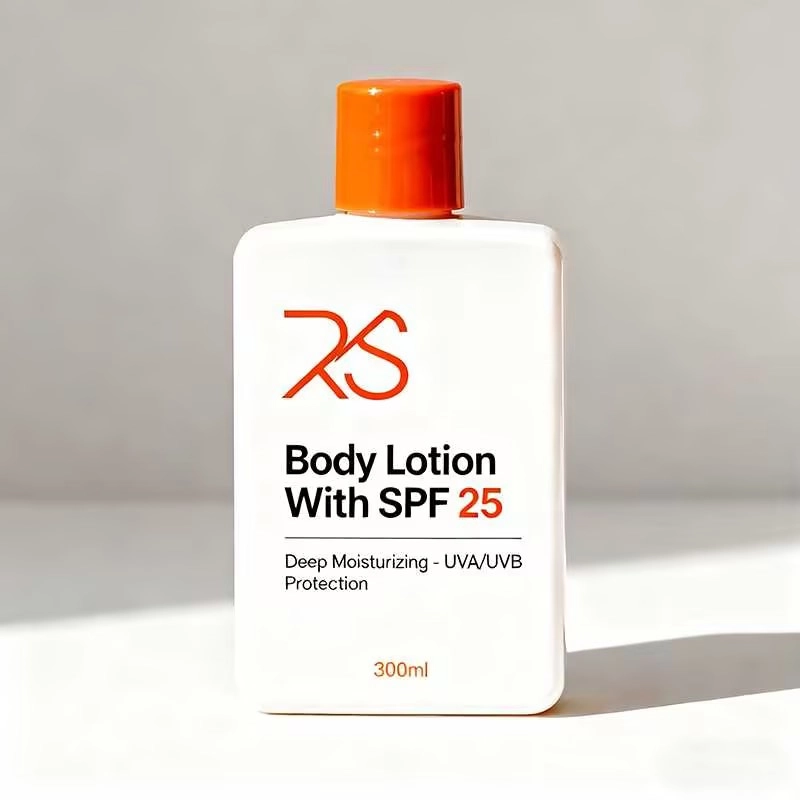
Here is our private label tanning sunscreen, pls click here for more details
1. The Mechanism: Sunscreen Blocks Rays, Not Chemistry
Sunscreen is a filter.
- The Myth: Sunscreen creates a total force field.
- The Reality: Even a high-quality SPF 30 blocks only about 97% of UVB rays. The remaining 3% penetrates the skin.
- The Result: For many skin types, that 3% is enough to trigger melanin production (tanning). So, while sunscreen drastically reduces the speed of tanning, it does not prevent it entirely. It allows for a slower, more gradual build-up of color.
2. How Sunscreen "Helps" You Keep a Tan
From a "Practical Solutions" standpoint, sunscreen is the best friend of a long-lasting tan.
- Preventing the Peel: If you tan without sunscreen, you are likely to burn. Burnt skin peels. When skin peels, your tan disappears.
- The Rysun Approach: By using a Rysun-formulated Broad-Spectrum sunscreen, you prevent the UVB damage that causes peeling. This keeps the skin barrier intact, allowing the melanin to remain visible for longer.
3. The Danger of "Tanning" vs. "Aging"
This is where Rysun’s Swiss anti-aging roots are critical.
- UVA vs. UVB: You mostly burn from UVB rays, but you tan largely from UVA rays.
- The Anti-Aging Conflict: UVA rays penetrate deep into the dermis and destroy collagen. While they give you a tan, they also give you wrinkles.
- Our Formulation Strategy: Our Research Institute creates sunscreens with high PA ratings (Protection Grade of UVA). We aim to block these tanning rays because, ultimately, a tan is visible DNA damage. We help brands create products that balance consumer desire for "glow" with the medical necessity of protection.
4. Inconsistent Quality Leads to Patchy Tans
If you have ever worn sunscreen and ended up with a patchy, streaky tan (or burn), the product failed you.
- The Rysun Solution: A consistent tan requires a consistent protective film. Through our 50 inspection procedures, we ensure that our UV filters are perfectly dispersed.
- The Benefit: This ensures that the 3% of UV light getting through is evenly distributed, preventing dangerous "hot spots" of burning while allowing for uniform, incidental color.
5. For Brands: The "Golden Glow" Formulation
Rysun partners with 700+ brands in over 50 countries. In markets where tanning is desired, we don't reduce the SPF. Instead, we formulate "Tan-Enhancing Sunscreens".
-
How we do it: We maintain high SPF 30-50 protection but infuse the formula with ingredients like Tyrosine or Beta-Carotene (antioxidants) that support the skin's natural melanin process safely, or we add cosmetic bronzers for an immediate, safe glow without UV damage.
Conclusion
Does sunscreen help you tan? It helps you tan safely (relatively speaking) by preventing the burns that destroy your skin layers. However, as a research-driven company, Rysun Biotechnology reminds you that there is no such thing as a completely healthy UV tan. Our goal is to provide the "Practical Solution": Maximum protection that keeps your skin healthy, whether you are pale or bronzed.
FAQs
Q1: Can I use a lower SPF to tan faster?
A: Yes, but it is dangerous. SPF 15 blocks 93% of UVB rays, letting 7% through (more than double that of SPF 30). This significantly increases your risk of skin cancer and premature aging just to get color faster.
Q2: Does "Water Resistant" sunscreen stop me from tanning?
A: It slows it down, which is good. Water magnifies UV rays. Without water-resistant sunscreen, you would burn very quickly. Rysun’s water-resistant formulas allow you to enjoy the water without suffering immediate skin trauma.
Q3: Is there a sunscreen that blocks burning but allows tanning?
A: Technically, all sunscreens do this to a degree. They are better at blocking UVB (burn) than UVA (tan). However, Rysun advises using Broad-Spectrum protection to block both, as UVA rays cause long-term aging.
Q4: How does Rysun test if a sunscreen allows tanning?
A: We test for Critical Wavelength. If a sunscreen has a long critical wavelength (over 370nm), it blocks the tanning rays (UVA) effectively. If a brand wants a product that allows tanning, we adjust the UVA filter ratio, though we always prioritize safety standards.
Related articles
Get more information
If you have any comments or good suggestions, please leave us a message; later our professional staff will contact you as soon as possible.
Rysun Biotechnology--Unremittingly strive for human health and beauty
Contact RYSUN
Email: k.lee@rysunoem.com
WhatsApp: +86 156 0306 9138
Address: No. 62 Nanxiang First Road, Science Town of Guangzhou Developed Zone, Huangpu, Guangzhou, China.
© 2025 RYSUN. All Rights Reserved. Privacy Policy | Terms and Conditions | Sitemap
Facebook
Instagram