


Does Sunblock Cause Cancer? A Manufacturer’s Guide to Safety & Benzene | Rysun Biotech
Asking "does sunblock cause cancer?" Medical consensus says no; it prevents it. However, contamination is real. Rysun Biotech’s R&D experts explain the Benzene scare and our strict safety testing.
Does Sunblock Cause Cancer? A Scientific Guide to Separating Fact from Fear
Introduction
For decades, the message was clear: wear sunblock to prevent skin cancer. Recently, however, headlines about chemical absorption and product recalls have flipped the script. Consumers are asking a terrifying question: "Does sunblock cause cancer?"
At Guangzhou Rysun Biotechnology, we believe that safety is the bedrock of beauty. Founded in 2014 by Ivy Wong specifically to address the "inconsistent quality" and safety issues in the market, and inspired by deep discussions with a Swiss anti-aging expert, we view sun protection as a life-saving technology.
Backed by our Research Institute and 20 leading scientists, we are here to provide the nuanced, scientific answer. No, sunblock ingredients do not cause cancer—but contaminants in low-quality manufacturing can. Here is the breakdown of the Benzene scare and how Rysun’s rigorous protocols ensure your brand is safe.
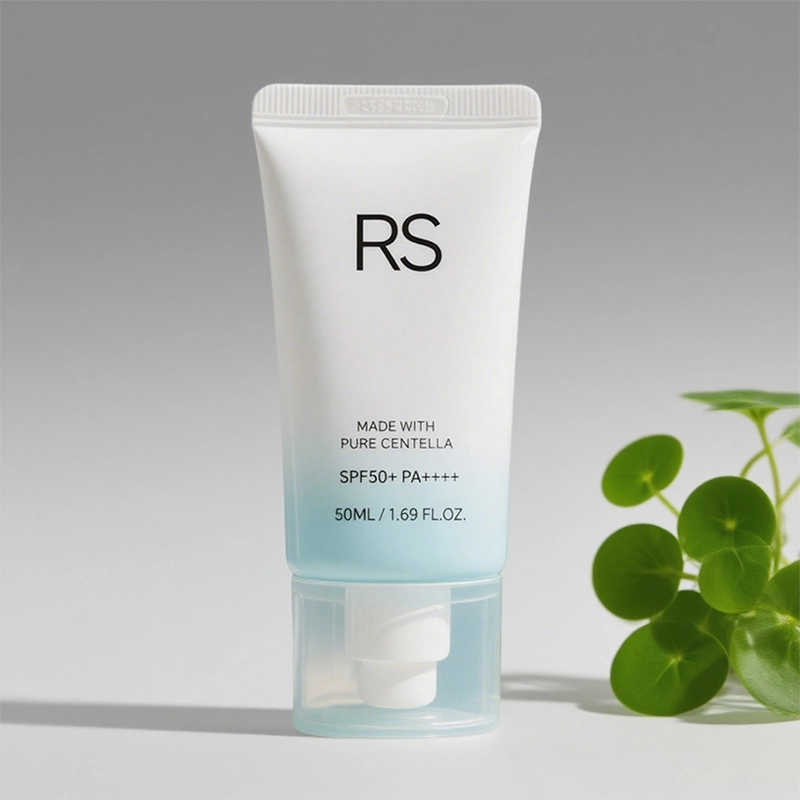
Here is our private label sunscreen collection, pls click here for more details.
The Medical Consensus: Sunblock Prevents Cancer
To answer "does sunblock cause cancer," we must look at the data.
- The Fact: UV Radiation is a proven human carcinogen. It damages DNA and causes Melanoma.
- The Solution: FDA-approved sunscreen filters (both chemical and mineral) are proven to reduce the risk of skin cancer by blocking this radiation.
- The Verdict: Skipping sunblock is significantly more dangerous than wearing it.
The Source of the Fear: The Benzene Contamination
Why are people worried? Because of Benzene.
- The Situation: In recent years, several major brands recalled aerosol sunscreens because traces of Benzene (a known carcinogen) were found.
- The Science: Benzene is NOT a sunscreen ingredient. It is not supposed to be there. It is a contaminant that can appear during the manufacturing of cheap propellants (sprays) or thickeners (carbomers) if the supply chain is dirty.
The Rysun Solution: Purity Assurance
This is a manufacturing failure, not an ingredient failure. Rysun prevents this through:
- Raw Material Screening: We implement up to 50 inspection procedures. We test every batch of raw materials for impurities before they enter our facility.
- Solvent Control: We avoid the use of solvents that are known to carry Benzene risks. Our production lines in the Guangzhou High-Tech Development Zone adhere to strict pharmaceutical-grade cleanliness.
The Chemical Fear: Endocrine Disruption
Another common fear involves ingredients like Oxybenzone entering the bloodstream.
- The Concern: Some studies suggest Oxybenzone might mimic hormones (endocrine disruption) in rats when fed in massive doses.
- The Reality: There is no conclusive evidence that it causes cancer in humans. However, Rysun acknowledges the consumer preference for caution.
- The Rysun Standard: We offer "Clean Chemistry" alternatives. We specialize in Mineral Sunscreens (Zinc Oxide) and modern filters that have large molecular weights. These molecules are too big to penetrate the skin barrier, staying safely on the surface to deflect the sun.
The Manufacturer’s Role: Engineering Safety
How do you ensure your brand never faces a recall? You partner with a research-driven manufacturer.
1. Stability Testing
Some ingredients can degrade into harmful byproducts if exposed to heat.
- Our Process: Leveraging our 253 intellectual properties, we stabilize our formulas. We stress-test them in ovens to ensure that the chemical bonds do not break down into anything toxic, even after months on a shelf.
2. Non-Nano Minerals
Some consumers worry that Nano-particles can enter cells and cause damage.
- Our Process: Rysun specializes in Non-Nano Zinc Oxide. We verify the particle size to ensure it is safe for the skin and the environment, removing any risk of cellular absorption.
Conclusion
So, does sunblock cause cancer?
The ingredients intended to be in the bottle? No.
Contaminants like Benzene? Yes, which is why manufacturing quality is everything.
At Rysun Biotechnology, we combine over 10 years of manufacturing excellence with Swiss-inspired safety standards. We treat sun care as a medical necessity. We ensure that our products are free from contaminants, stable under stress, and scientifically proven to protect. Partner with us to manufacture sun care that saves lives, without the risk.
FAQs
Q1: How does Rysun ensure there is no Benzene in my product?
A: Benzene usually comes from specific propellants or gelling agents. Rysun sources from certified, high-purity suppliers and conducts analytical testing on finished goods to certify they are "Benzene-Free."
Q2: Is Mineral Sunscreen safer regarding cancer risk?
A: Many dermatologists prefer it for peace of mind. Zinc Oxide and Titanium Dioxide are inert minerals. They do not absorb into the body, eliminating any fear of systemic toxicity or cancer.
Q3: Can expired sunblock cause cancer?
A: There is no evidence it causes cancer, but it does cause sunburns, which lead to cancer. Expired sunscreen loses its ability to block UV rays. Rysun’s stability testing ensures the product remains active for its full shelf life.
Q4: Do sprays carry a higher risk than lotions?
A: Historically, the Benzene recalls affected sprays (aerosols) more than lotions. Rysun manufactures lotions, creams, and non-aerosol pump sprays, which have a significantly cleaner safety record.
Related articles

Get more information
If you have any comments or good suggestions, please leave us a message; later our professional staff will contact you as soon as possible.
Rysun Biotechnology--Unremittingly strive for human health and beauty
Contact RYSUN
Email: k.lee@rysunoem.com
WhatsApp: +86 156 0306 9138
Address: No. 62 Nanxiang First Road, Science Town of Guangzhou Developed Zone, Huangpu, Guangzhou, China.
© 2025 RYSUN. All Rights Reserved. Privacy Policy | Terms and Conditions | Sitemap
Facebook
Instagram