


Sourcing Guide: How to Procure Private Label Whitening Lotion
- Why choose a clinically-backed Private Label Whitening Body Lotion?
- Market demand and positioning
- Product overview and value proposition
- Key ingredients and clinical rationale
- Active ingredient roles and clinical doses
- Evidence and safety considerations
- Manufacturing, quality and compliance checklist
- GMP and supplier vetting
- Regulatory labeling and safety testing
- Minimum order quantities, lead times and scalability
- Packaging, claims, and go-to-market strategy
- Packaging choices that preserve efficacy
- Claims, marketing language and substantiation
- Positioning to be the best body lotion for glowing skin
- Formulation table: actives, function, and typical tolerability
- Supplier questions and sample checklist
- What to request from potential manufacturers
- Conducting a pilot test
- Frequently Asked Questions (FAQ)
- Q: Is 5% niacinamide safe for daily body use?
- Q: How soon will users see results for dark spots and uneven tan lines?
- Q: Can this lotion be combined with other actives like retinol or vitamin C?
- Q: What are the regulatory considerations for labeling “whitening” claims?
- Q: What is the MOQ and are formula customizations possible?
- Next steps and how to contact us
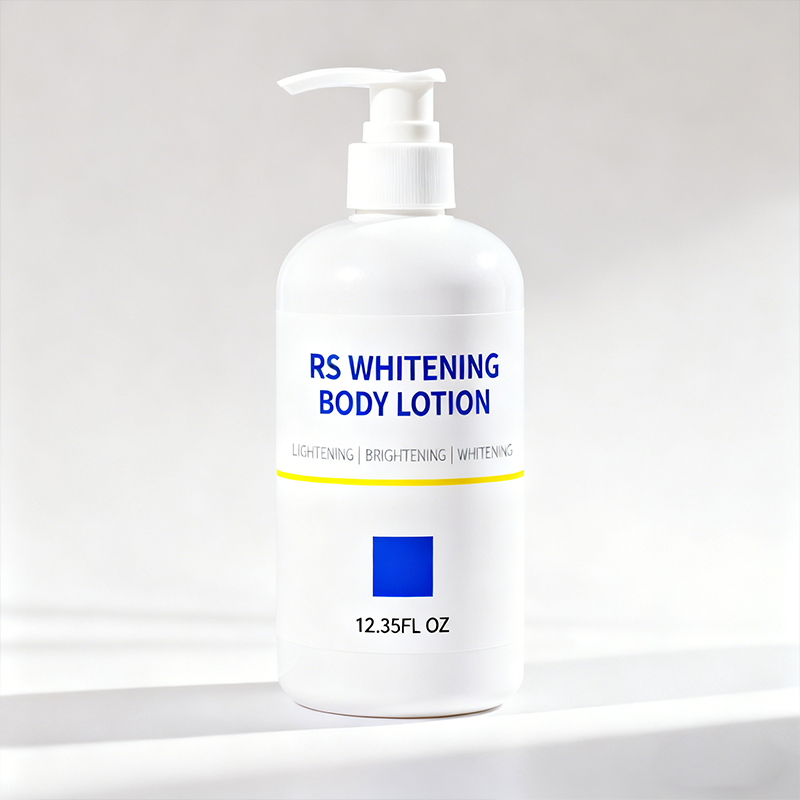
This sourcing guide is written for brand owners, product managers, and private-label buyers across Asia, Europe, North America and other regions seeking to procure a high-efficacy Private Label Whitening Body Lotion. It summarizes formulation benefits, critical ingredient doses, compliance and manufacturing checkpoints, packaging options, and commercial considerations you need to evaluate so your finished product consistently performs as the best body lotion for glowing skin in your target market.
Why choose a clinically-backed Private Label Whitening Body Lotion?
Market demand and positioning
Consumers continue to seek lotions that do more than moisturize — they want visible brightening, fewer dark spots, and an even tone while maintaining skin health. Positioning a Private Label Whitening Body Lotion with clinically effective actives (rather than cosmetic powders or temporary brighteners) can help RYSUN stand out in the saturated body-care category and meet consumer desire for the best body lotion for glowing skin.
Product overview and value proposition
Product snapshot: Private Label Whitening Body Lotion is an effective whitening body lotion that targets the three stages of pigmentation — production, transfer, and surface accumulation — delivering a natural, even skin tone without physical powders. The formula leverages a clinical dose of 5% Niacinamide, combined with 3% Tranexamic Acid and 2.5% N-Acetyl Glucosamine (NAG) to block pigment transfer and calm inflammation that triggers pigment production. Papaya Enzyme and Lactic Acid provide gentle exfoliation, revealing brighter skin while binding moisture to prevent the dry, peeling look associated with some AHAs. MOQ for this private label Whitening Body Lotion is 1000 units, and tailored formulas are available.
Key ingredients and clinical rationale
Active ingredient roles and clinical doses
Understanding why each active works helps when evaluating suppliers and claims. The chosen clinical doses in this formula are designed for measurable efficacy while maintaining safety:
- Niacinamide 5% — reduces melanosome transfer and supports barrier repair.
- Tranexamic Acid 3% — reduces melanogenesis and is useful for sun spots and melasma-prone skin.
- N-Acetyl Glucosamine (NAG) 2.5% — can inhibit pigment synthesis and works synergistically with niacinamide.
- Papaya Enzyme + Lactic Acid — mild enzymatic and chemical exfoliation to remove dull surface cells and increase brightness without aggressive peeling.
These actives are selected to address pigmentation at production, transfer, and surface accumulation — a three-pronged approach that can outperform single-ingredient brighteners.
Evidence and safety considerations
When making claims such as “whitening” or “reduces sun spots,” back them with evidence and ensure label compliance in your target markets. Regulatory and safety resources include the U.S. FDA Cosmetics guidance for labeling and claims and the ISO 22716 standard for cosmetic good manufacturing practices. For ingredient-specific literature, consult peer-reviewed studies and systematic reviews via PubMed and research on tranexamic acid via PubMed. The Cosmetic Ingredient Review (CIR) is also a useful safety reference: CIR.
Manufacturing, quality and compliance checklist
GMP and supplier vetting
Insist on manufacturers that comply with cosmetic GMP (ISO 22716) and can provide batch records, allergen and preservative efficacy testing (challenge tests), heavy metals screening, and stability data. Ask for certificates of analysis (CoA) for active raw materials and independent third-party testing where possible. Verifiable GMP helps assure batch-to-batch consistency and supports claims to retailers.
Regulatory labeling and safety testing
Different markets have different labeling rules for whitening and active concentrations. For example, the EU's cosmetics regulation requires a Product Information File (PIF) and safety assessment prior to placing a product on the market. In the U.S., avoid drug claims that would reclassify the product. Typical safety tests to request include:
- Preservative efficacy test (Challenge Test)
- Stability testing at multiple temperatures
- Microbial limits and endotoxin where relevant
- Patch testing for irritation/sensitization (especially for leave-on brighteners)
Minimum order quantities, lead times and scalability
MOQ for this Private Label Whitening Body Lotion is 1000 units. Confirm lead times, filling capacity (units per day), and scaling tiers (e.g., pricing at 1k, 5k, 10k) with potential suppliers. Ensure clear agreement on formula ownership, labeling, artwork changes, and turn-around for reformulation if you need variant SKUs (scent free, tinted, SPF boosted).
Packaging, claims, and go-to-market strategy
Packaging choices that preserve efficacy
Active stability matters. For this brightening lotion, consider airless pump bottles or UV-protective tubes to minimize oxidation and degradation of actives like niacinamide and tranexamic acid. Secondary packaging (boxes) should contain ingredient and usage callouts and any required warning statements (e.g., avoid broken skin, avoid eyes; use sunscreen during the day if product increases photosensitivity).
Claims, marketing language and substantiation
Use truthful, substantiated claims tied to your clinical data. Prefer statements like “clinically dosed 5% niacinamide for reducing pigment transfer” instead of unverified absolutes. To support marketing, request small clinical or consumer perception studies from your manufacturer (e.g., 4–8 week use studies showing reduction in spot intensity or improvement in overall tone). Keep your label compliant with local regulations when using words like “whitening,” “brightening,” or “lightening.”
Positioning to be the best body lotion for glowing skin
To claim “best body lotion for glowing skin,” you must combine demonstrable efficacy, sensory performance (non-greasy, fast-absorbing), and positive user perception. Invest in packaging that feels High Quality, provide clear usage instructions (apply twice daily to target areas), and include SPF guidance to prevent recurrence of sun-induced pigment.
Formulation table: actives, function, and typical tolerability
| Ingredient | Clinical Dose (in this formula) | Primary Function | Tolerability Notes |
|---|---|---|---|
| Niacinamide | 5% | Reduces melanosome transfer; strengthens barrier; reduces inflammation | Well tolerated; avoid combining immediately with strong vitamin C in same product without stability checks |
| Tranexamic Acid | 3% | Reduces melanogenesis and inflammation-driven pigmentation | Generally safe topically; patch testing recommended for sensitive skin |
| N-Acetyl Glucosamine (NAG) | 2.5% | Inhibits pigment synthesis; synergizes with niacinamide | Good tolerability; supports gradual brightening without irritation |
| Papaya Enzyme + Lactic Acid | Low, skin-friendly concentrations | Mild exfoliation to remove dull surface cells and improve texture | Milder than glycolic acid; monitor for sensitivity |
Supplier questions and sample checklist
What to request from potential manufacturers
- Full formulation sheet with INCI names and active concentrations.
- Stability data (3–12 months) showing retention of active concentrations and sensory properties.
- CoA for raw materials and final product (microbial and heavy metals).
- Evidence of GMP compliance (ISO 22716 certificate or audit reports).
- Packaging options and sample filled units (for sensory/usability testing).
Conducting a pilot test
Before committing to a full order, request 50–200 sample units filled in final packaging for consumer testing. Evaluate absorption, fragrance acceptability, whitening performance on test panels, and any adverse responses. Use these results to refine claims, marketing messaging, and final label copy.
Frequently Asked Questions (FAQ)
Q: Is 5% niacinamide safe for daily body use?
A: Yes — 5% niacinamide is a commonly used clinical dose that is generally well tolerated for daily, leave-on products. It's often selected for efficacy against hyperpigmentation and barrier support. Still, recommend patch testing for sensitive users and include usage guidance on the label.
Q: How soon will users see results for dark spots and uneven tan lines?
A: Results depend on the type and depth of pigmentation. With consistent twice-daily application, many users notice improvement in tone and brightness within 4–8 weeks; deeper solar lentigines or long-standing melasma can take longer and may require complementary in-clinic treatments.
Q: Can this lotion be combined with other actives like retinol or vitamin C?
A: Combining potent actives requires care. Niacinamide is generally compatible with many ingredients, but product stability and skin irritation risk should be reviewed. If pairing with retinoids or exfoliating acids, advise staggered use (e.g., brightening lotion AM, retinoid PM) and always recommend sunscreen during the day.
Q: What are the regulatory considerations for labeling “whitening” claims?
A: Regulations vary by market. In some regions, “whitening” claims can be sensitive; use clinically substantiated language and ensure your Product Information File and safety assessment support claims. Consult local regulatory counsel when in doubt. See FDA Cosmetics and ISO guidance (ISO 22716).
Q: What is the MOQ and are formula customizations possible?
A: The baseline MOQ is 1000 units. Tailored formulas, fragrance-free versions, or variants with different packaging are typically available — confirm lead times and tooling or artwork minimums with your supplier.
Next steps and how to contact us
If you’re ready to evaluate samples or discuss tailored formulation and pricing for the Private Label Whitening Body Lotion (MOQ 1000 units), contact our sourcing team for product sheets, CoAs, stability reports, and pricing tiers. We can help you create an offering that competes for the title of the best body lotion for glowing skin in your market.
Contact our sourcing team | View product details: Private Label Whitening Body Lotion
Best Facial Cleansers for Men: Face Wash Guide
Ingredients to Look for in Men's Body Lotion

Formulation Checklist: Effective Hair Oil for Dry Hair
Fragrance-Free Gentle Makeup Removers Worth Trying
Face Moisturizer
Is the formula free from common allergens or irritants?
It is a 100% safe formula.
Facial Mask
What is your lead time for the bulk production?
Usually we need 35 days to finish the bulk production after design confirm.
Body Lotion
How do you ensure long-lasting hydration?
We use good humectants like hyaluronic acid, glycerin, and even urea to hold the water. And other ingredients to lock moisture in.
Makeup Remover
Can I just use my regular face wash to remove makeup?
No, face wash is just for daily face cleansing; it can't remove your makeup thoroughly, even for light makeup. Please use a makeup remover.
Hair Mask
Do you offer base formulas for specific hair types and concerns?
Yes, we have different formulas; some are targeted for colored, perm and curly hair, some are for normal hair care.
Get more information
If you have any comments or good suggestions, please leave us a message; later our professional staff will contact you as soon as possible.
Rysun Biotechnology--Unremittingly strive for human health and beauty
Contact RYSUN
Email: k.lee@rysunoem.com
WhatsApp: +86 156 0306 9138
Address: No. 62 Nanxiang First Road, Science Town of Guangzhou Developed Zone, Huangpu, Guangzhou, China.
© 2025 RYSUN. All Rights Reserved. Privacy Policy | Terms and Conditions | Sitemap
Facebook
Instagram