


Buyer's Guide to Choosing Private Label Whitening Lotions
- Understanding Private Label Whitening Body Lotions and Market Fit
- What “whitening” means—and why terminology matters
- Product Spotlight: Private Label Whitening Body Lotion
- Who should carry private label whitening lotions?
- Key Ingredients: What to Require and Why
- Active ingredients that drive brightening
- How each ingredient contributes to glowing skin
- Formulation Considerations: Safety, Stability, and Performance
- Choosing clinical doses vs. marketing percentages
- Patch testing, preservative systems, and compatibility
- Labeling and claims—what you can and cannot say
- Manufacturing, MOQ, Packaging, and Commercial Considerations
- Minimum Order Quantities, private label customization, and lead times
- Packaging choices to support product performance and positioning
- Cost breakdown—example comparison
- Marketing Positioning and SEO: Helping Consumers Find the Best Body Lotion for Glowing Skin
- Optimizing product pages and content for search
- Educational content that builds trust
- Sample marketing claims and approved language
- Practical Checklist for Selecting a Private Label Whitening Lotion Partner
- FAQ
- Is Private Label Whitening Body Lotion safe for all skin types?
- How long until users see results?
- Can this lotion replace sunscreen?
- Are there regulatory restrictions I should know about?
- Can the formula be tailored (fragrance-free, higher SPF pairing, etc.)?
When shoppers search locally or globally for the best body lotion for glowing skin, they expect a product that delivers visible brightening without sacrificing safety or moisture. For brands looking to launch a Private Label Whitening Body Lotion, understanding active ingredient doses, regulatory expectations, formulation strategy, and manufacturing minimums is essential for market success. This guide is tailored to help private label buyers evaluate formulas, choose partners, and position a whitening body lotion that balances efficacy, tolerability, and commercial viability across geographies.
Understanding Private Label Whitening Body Lotions and Market Fit
What “whitening” means—and why terminology matters
In skincare, whitening commonly refers to reducing hyperpigmentation and evening skin tone rather than altering natural skin color. Brands must be careful with language to align with regulations and consumer expectations: use terms like brightening, tone-evening, or reduces dark spots rather than absolute claims of skin color change. This also helps position your product as the best body lotion for glowing skin for consumers seeking radiance and clarity without harmful ingredients.
Product Spotlight: Private Label Whitening Body Lotion
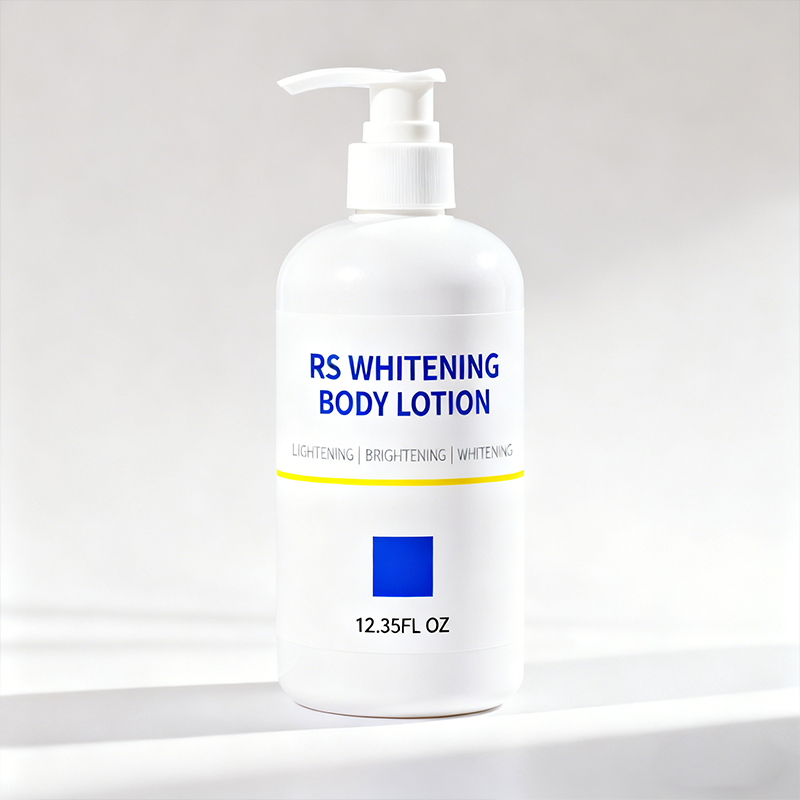
An effective whitening body lotion that targets the three stages of pigmentation: production, transfer, and surface accumulation. It creates a natural skin tone without using any physical powders.
We utilize a clinical dose of 5% Niacinamide, combined with 3% Tranexamic Acid and 2.5% NAG. They stop the transfer of pigment from the melanocyte to the skin cell and calm the inflammation that triggers pigment production, effectively fading sun spots, scars, and uneven tan lines without toxicity.
And we add Papaya Enzyme, Lactic Acid, which exfoliates dull, dark surface cells while simultaneously binding moisture to the skin. This reveals fresh, brighter skin underneath without causing the peeling associated with Glycolic Acid.
MOQ for this private label Whitening Body Lotion is 1000 units, tailored formulas available.
Who should carry private label whitening lotions?
Private label whitening lotions work well for: specialty beauty retailers, dermatology clinics with retail lines, boutique brands expanding into body care, and e-commerce businesses targeting best body lotion for glowing skin searches. Selecting a formulation with clinical doses and clear claims will help differentiate your product in search results and earn consumer trust.
Key Ingredients: What to Require and Why
Active ingredients that drive brightening
A high-performing whitening body lotion balances actives that interrupt pigment biology with gentle exfoliants and hydrators. The Private Label Whitening Body Lotion formula (5% Niacinamide, 3% Tranexamic Acid, 2.5% N-Acetyl Glucosamine (NAG), Papaya Enzyme, and Lactic Acid) is designed to address three pigmentation stages: production, transfer, and surface accumulation. These concentrations fall within ranges used in peer-reviewed literature and clinical protocols for pigment reduction while maintaining skin tolerance.
How each ingredient contributes to glowing skin
Below is a simple breakdown of key actives and their primary functions which demonstrate why this formula targets the needs of consumers seeking the best body lotion for glowing skin.
| Ingredient | Typical Dose | Primary Function |
|---|---|---|
| Niacinamide (Vitamin B3) | 4–5% | Reduces pigment transfer, strengthens barrier, improves texture and radiance. |
| Tranexamic Acid | 2–5% | Reduces melanocyte activation and inflammation-driven pigmentation. |
| N-Acetyl Glucosamine (NAG) | 2–3% | Inhibits pigment formation and enhances exfoliation synergy with niacinamide. |
| Papaya Enzyme (Papain) | 0.5–2% | Gentle enzymatic exfoliation to remove dull surface cells. |
| Lactic Acid | 1–5% | Exfoliant with humectant properties—brightens without aggressive peeling. |
For further reading on active ingredients, consult reputable summaries such as the Niacinamide entry on Wikipedia and clinical literature on tranexamic acid available through PubMed. Also review general cosmetics guidance on the FDA cosmetics site and ingredient safety assessments at the Cosmetic Ingredient Review (CIR).
Formulation Considerations: Safety, Stability, and Performance
Choosing clinical doses vs. marketing percentages
Consumers often equate higher percentages with better results, but clinical efficacy depends on the ingredient and formulation context. The Private Label Whitening Body Lotion uses clinically supported doses (e.g., 5% niacinamide) that are effective while minimizing irritation. Carefully designed pH, delivery systems, and stabilizers ensure actives remain bioavailable—important for consumer satisfaction and to reduce returns.
Patch testing, preservative systems, and compatibility
Manufacturers should provide irritation and preservative efficacy data (Challenge Test/USP guidance), and ideally dermatological patch tests. Compatibility of enzymes (papain) and acids (lactic acid) with other actives must be validated to avoid denaturation or reduced efficacy over shelf life.
Labeling and claims—what you can and cannot say
Regulatory bodies differ by market. In the U.S., the FDA regulates cosmetics and disallows drug claims (e.g., treats hyperpigmentation) unless supported by drug approval. Use compliant phrasing such as helps reduce appearance of dark spots or tone-evening body lotion. For markets with stricter language rules, consult local regulations prior to printing claims and ingredient lists.
Manufacturing, MOQ, Packaging, and Commercial Considerations
Minimum Order Quantities, private label customization, and lead times
The featured Private Label Whitening Body Lotion offers an MOQ of 1000 units with tailored formulas available. When evaluating manufacturers consider: customization options, lead time, small-batch testing, and flexibility for seasonal or size variants. Smaller MOQs allow market testing but usually carry higher per-unit costs.
Packaging choices to support product performance and positioning
Packaging affects both stability and perceived value. Consider opaque tubes or airless pumps to protect actives from light and oxidation. Sustainable materials are increasingly important to consumers and can be highlighted in marketing as part of why your product is the best body lotion for glowing skin for eco-conscious buyers.
Cost breakdown—example comparison
The table below illustrates typical cost drivers when sourcing a private label whitening body lotion. Use it to prioritize investments (e.g., active concentration vs. High Quality packaging).
| Cost Component | Typical % of Unit Cost | Notes |
|---|---|---|
| Actives (Niacinamide, Tranexamic acid, NAG) | 20–35% | High-quality actives raise efficacy and margin potential. |
| Manufacturing & QA | 15–25% | Includes stability testing and batch release. |
| Packaging | 10–30% | High Quality pumps or sustainable materials cost more. |
| Marketing & Compliance | 10–20% | Claims substantiation, labeling, and sample distribution. |
Marketing Positioning and SEO: Helping Consumers Find the Best Body Lotion for Glowing Skin
Optimizing product pages and content for search
To rank for queries like best body lotion for glowing skin, create product pages and blog content that answer user intent: ingredient benefits, how to use the lotion on body areas, expected timelines for results, and safety information. Include high-quality images, ingredient lists, and before/after visuals (with consent). Structured data (Product, Review schema) helps search engines display rich snippets.
Educational content that builds trust
Publish FAQs, explain ingredient science simply, and link to authoritative sources (e.g., FDA, CIR, PubMed). This demonstrates Expertise and helps satisfy Google's E-E-A-T criteria. Provide application tips (apply on damp skin after shower for better absorption) and pairing suggestions (use SPF on exposed areas daily to prevent new pigmentation).
Sample marketing claims and approved language
- Helps reduce the appearance of dark spots and uneven skin tone
- Clinically dosed actives for brighter-looking skin
- Designed to be gentle—suitable for daily body use
Practical Checklist for Selecting a Private Label Whitening Lotion Partner
Use this checklist when vetting suppliers to ensure you launch a product that meets performance, safety, and commercial goals:
- Active concentrations and substantiation (request stability and efficacy data)
- Patch test / dermatological irritation reports
- Preservative efficacy test (Challenge Test)
- Certificate of Analysis (COA) for actives
- Minimum Order Quantity and lead times
- Options for customized fragrance-free or sensitive-skin versions
- Packaging and artwork support for regulatory labeling
- Post-launch support for batch testing and complaints handling
FAQ
Is Private Label Whitening Body Lotion safe for all skin types?
Formulations using clinical doses like 5% niacinamide and moderate levels of tranexamic acid are generally well tolerated across skin types. However, consumers with very sensitive skin or broken skin should perform a patch test and consult a dermatologist if unsure. Manufacturers should provide patch test results and guidance for sensitive-skin variants.
How long until users see results?
Visible improvements in hyperpigmentation and overall brightness typically appear in 4–8 weeks with consistent use (twice daily for many actives), though some users notice improved texture and radiance sooner due to exfoliating and hydrating components. Clinical timelines vary with pigmentation depth and compliance.
Can this lotion replace sunscreen?
No. A whitening or brightening lotion treats existing pigmentation, but sun exposure is a major driver of new pigment formation. Use a broad-spectrum sunscreen daily on exposed areas to protect results and prevent recurrence.
Are there regulatory restrictions I should know about?
Yes—cosmetic regulations differ by market. In many jurisdictions, certain ingredients, claims, and labeling must comply with local law. Consult regulatory experts for markets you intend to sell in and ensure claims avoid implying drug-like treatment. Useful starting points: FDA cosmetics and CIR.
Can the formula be tailored (fragrance-free, higher SPF pairing, etc.)?
Yes—most private label manufacturers offer customizations such as fragrance-free versions, hypoallergenic options, and co-packaging with complementary products like body sunscreens or serums. Expect additional development time and slightly higher MOQ or unit costs for custom batches.
If you want to evaluate samples, access technical sheets, or discuss customized formulations, contact our private label team: sales@yourcompany.com. To view the Private Label Whitening Body Lotion and request a quote, visit: /products/private-label-whitening-body-lotion.
References: Niacinamide overview (Wikipedia), tranexamic acid literature (PubMed), FDA cosmetics guidance (FDA), and ingredient safety reviews (CIR).
Top Certifications to Request from Lotion Suppliers
How Private Label 24k Gold Eye Masks Boost Your Skincare Line
Why Gentle Makeup Remover Is Better for Aging Skin
Korean Best Toner for Face: K-Beauty Favorites
Face Moisturizer
What is the minimum order quantity (MOQ)?
The MOQ is 1000 units in a jar.
Makeup Remover
What is "double cleansing," and is it necessary?
Double cleansing is a two-step face cleaning. First, use a makeup remover to remove makeup. Second, use a face cleanser to clean your skin. It is a recommended way in the daily routine to protect your skin.
Face Toner
What Is The Most Popular Face Toner?
From the database, it is the face toner for oily skin.
Body Wash
Beyond basic cleansing, what active ingredients can be integrated?
I list some trendy ingredients above; please have a look. We have our own factory and can add any popular and useful ingredients.
Hair Mask
What is the pH value for your hair mask?
The pH value of around 5 to 5.5 is good at sealing the hair cuticle, locking in moisture, and enhancing shine.
Get more information
If you have any comments or good suggestions, please leave us a message; later our professional staff will contact you as soon as possible.
Rysun Biotechnology--Unremittingly strive for human health and beauty
Contact RYSUN
Email: k.lee@rysunoem.com
WhatsApp: +86 156 0306 9138
Address: No. 62 Nanxiang First Road, Science Town of Guangzhou Developed Zone, Huangpu, Guangzhou, China.
© 2025 RYSUN. All Rights Reserved. Privacy Policy | Terms and Conditions | Sitemap
Facebook
Instagram